

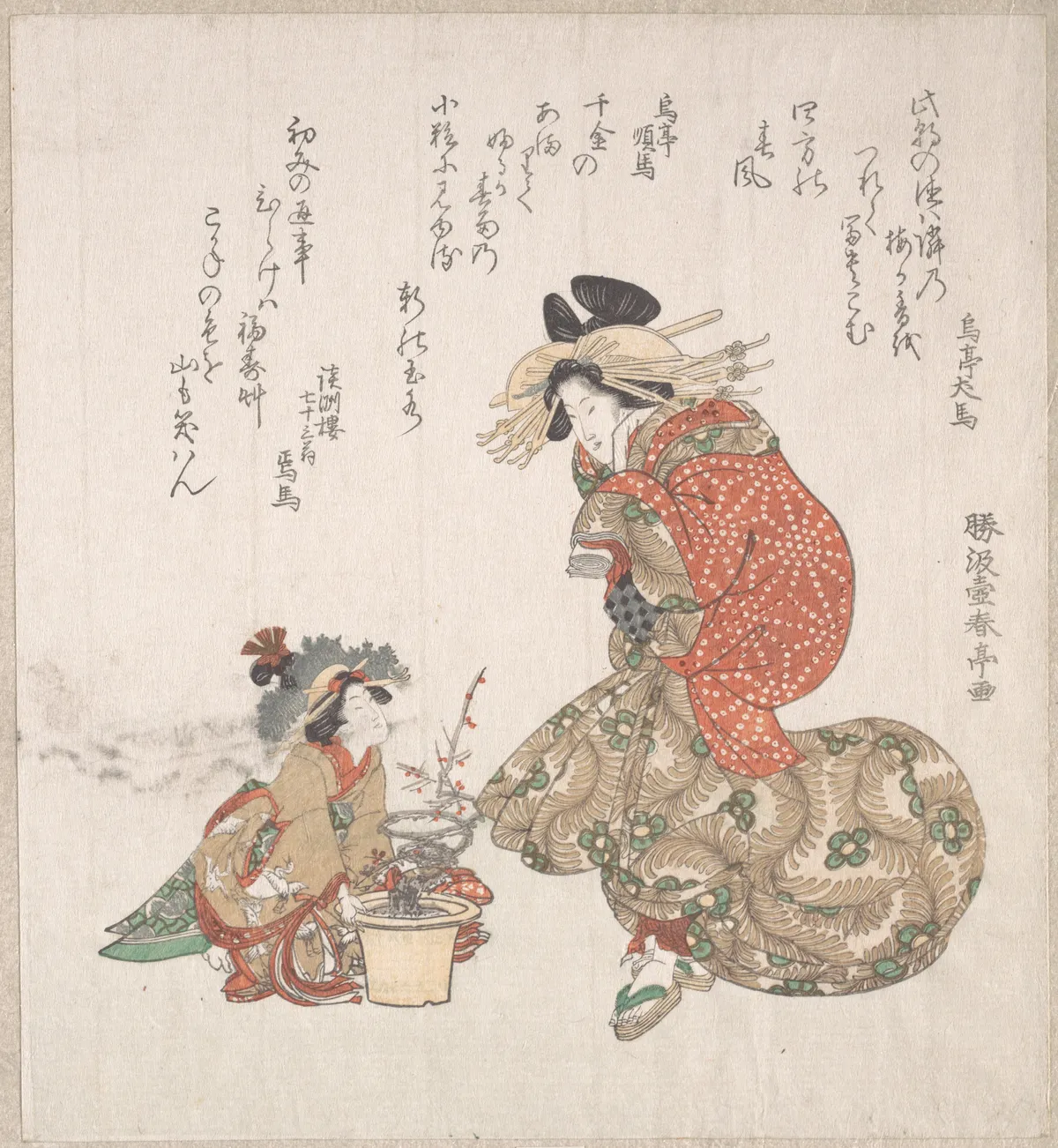
Courtesan and Her Child
The room is quiet. The air is thick with the scent of plum blossoms. A courtesan sits, her kimono a cascade of silken layers, patterns of spring. Her eyes, dark and distant, follow the lines of a potted plum tree, its blossoms a whisper of white against the shadows.
Beside her, a child attendant, barely more than a whisper herself, stands poised. Her small hands clutch the hem of her own simple robe, eyes wide with the solemnity of youth. The courtesan's gaze shifts, meeting the child's. A silent understanding passes between them, fragile as the petals that dust the floor.
In the corner, a lantern flickers, casting soft halos across the tatami. The only sound is the faint rustle of fabric as the courtesan adjusts her sleeves. Her world is a delicate balance of poise and duty, beauty and isolation. The child, in her innocence, mirrors this world, absorbing its quiet grace.
Time slows. The plum tree, a symbol of resilience, stands rooted in its pot, a silent testament to nature's cycle, to renewal. The courtesan, with her painted lips and powdered face, is a fleeting blossom in Edo's garden, her life as ephemeral as the blooms she admires.
Historical Echo
In Edo, the courtesan was a figure of allure and mystery. Her presence, both a performance and a prison, was woven into the vibrant tapestry of the city's pleasure quarters. The child attendant, a shadow of her own future, learned the art of silence and observation. Katsukawa Shuntei captures this moment in time, a delicate interplay of tradition and transience, where beauty is both celebrated and confined.