

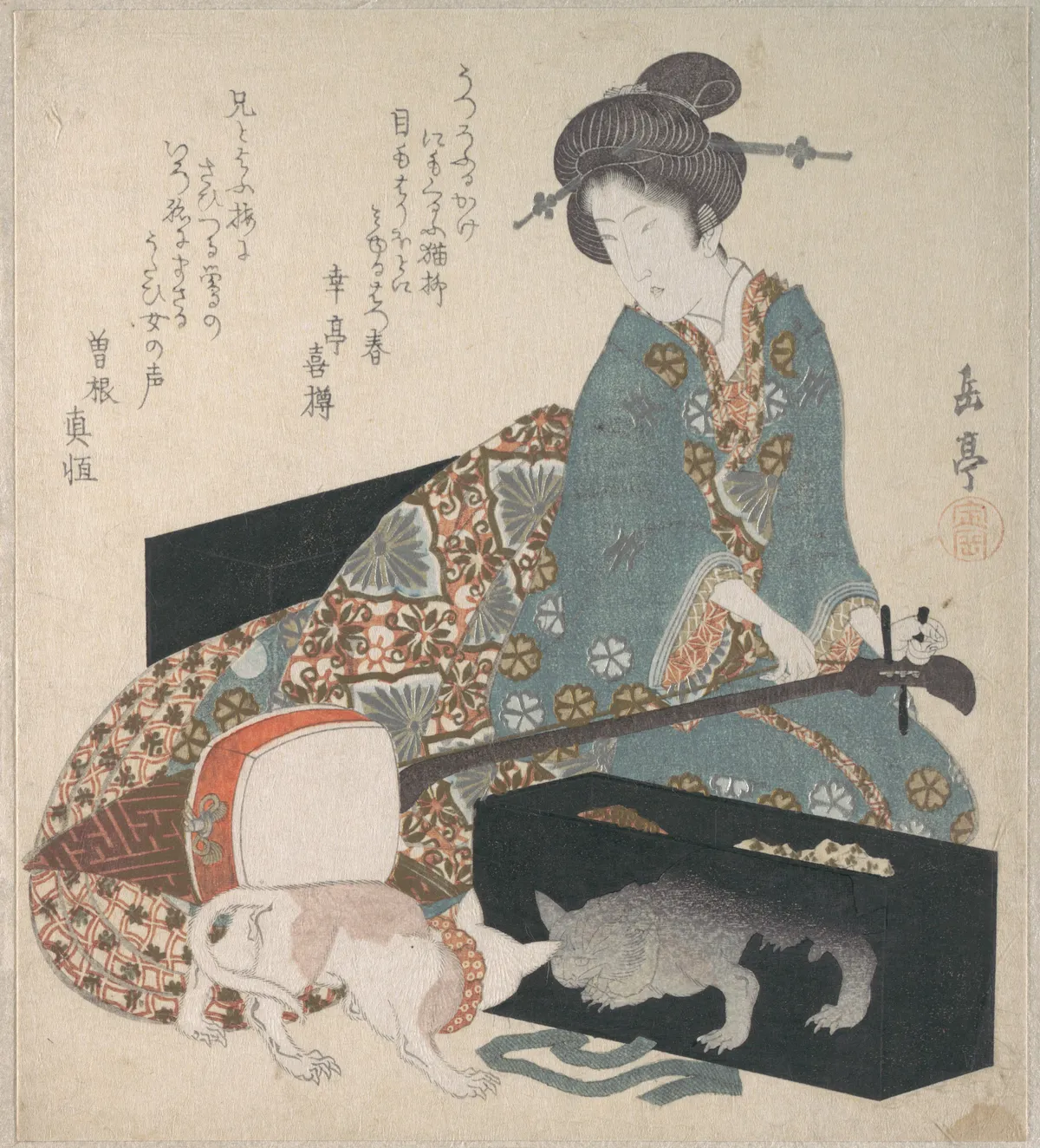
Woman Tuning a Shamisen and a Cat Looking at its Own Reflection
The room is silent except for the soft, deliberate plucking of strings. A woman, her face serene, delicately tunes her shamisen. The instrument rests against her knee, its wood polished and familiar. Her fingers, deft and practised, move with a calm precision.
Beside her, a cat sits transfixed. Its eyes, wide and unblinking, stare into a small mirror on the floor. The reflection stares back, equally captivated. Whiskers twitch in the dim light, a quiet counterpoint to the woman's tuning. The air is still, thick with anticipation.
A lantern flickers in the corner, casting long shadows that dance across the tatami mats. Outside, the world remains hushed, the night air cool against paper screens. There is a sense of waiting, of moments stretching into the timeless night.
The woman's kimono brushes softly against the floor as she shifts her weight slightly. The cat's tail flicks once, twice, the only sign of impatience. Yet, the spell holds. In this room, this small space, the world outside fades away, leaving only the music yet to come and the silent contemplation of the cat.
Historical Echo
In the mid-1820s, Japan's Edo period flourished with cultural vibrancy. The shamisen, a staple of entertainment, found its place in the intimate corners of homes and bustling theatres alike. Yashima Gakutei, known for his refined and delicate prints, captures a moment of quiet reverie. The woman and her cat, both absorbed in their worlds, offer a glimpse into the domestic serenity of the time.