

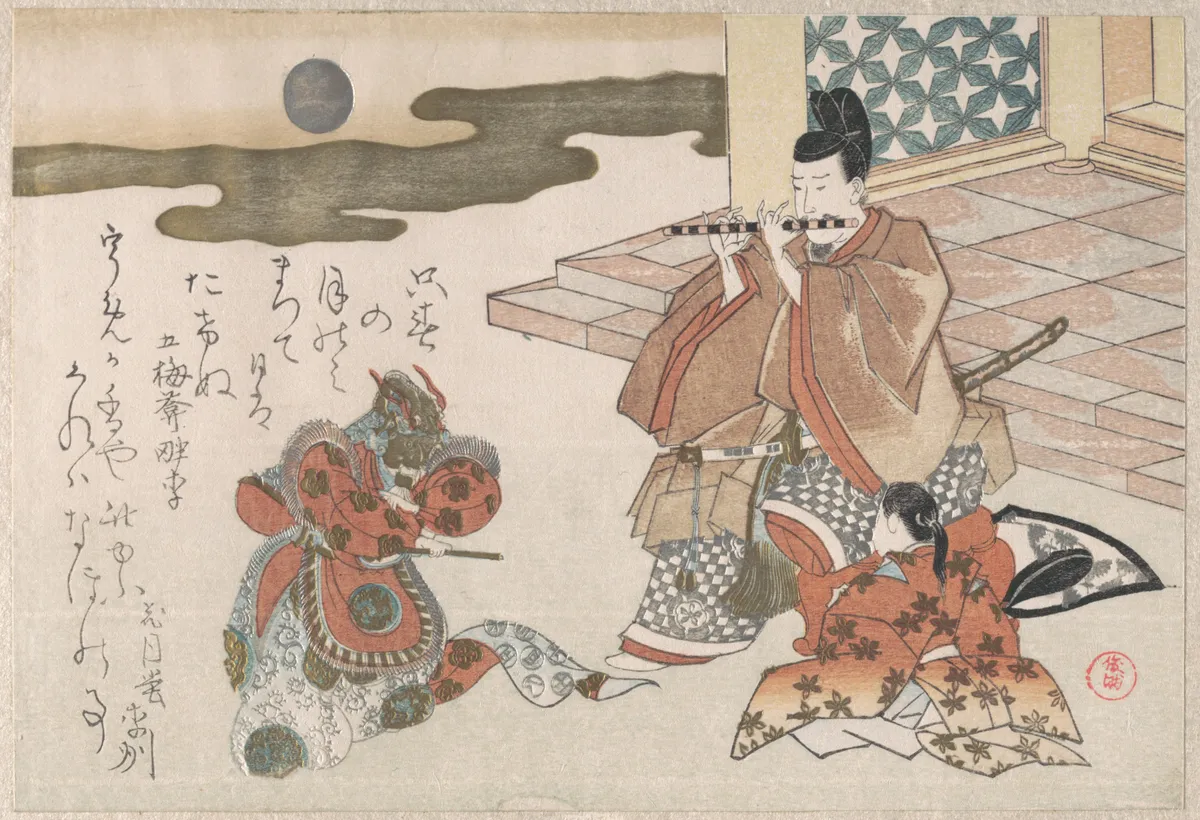
Courtier's Melody
The courtier sat in poised silence, flute in hand. The air felt thick with anticipation. He raised the flute gently to his lips, its cool surface a contrast to the warm room. As he breathed into the instrument, the first notes floated, tentative and clear.
The bugaku dancer, adorned in elaborate robes, moved with deliberate grace. The silk rustled softly, echoing the flute's gentle call. Each step seemed to draw the room into a quiet dance of its own. The courtier watched, his eyes tracing the dancer's movement, his music entwining with the rhythm of the dance.
Outside, a faint breeze stirred the garden leaves. The night enveloped the palace, its silence broken only by the haunting melody. The courtier played on, each note a thread weaving through the stillness, binding the moment to memory.
Historical Echo
Bugaku is a traditional Japanese dance that has been performed in the Imperial Court for centuries. Its origins trace back to the early Heian period, influenced by the music and dance of the Asian mainland. The courtier's role, though often overshadowed by the dancers, was essential in setting the tempo and mood of the performance. In Kubo Shunman's depiction, the focus on the flautist highlights the delicate interplay between music and movement, capturing a quiet yet profound moment of cultural expression.