

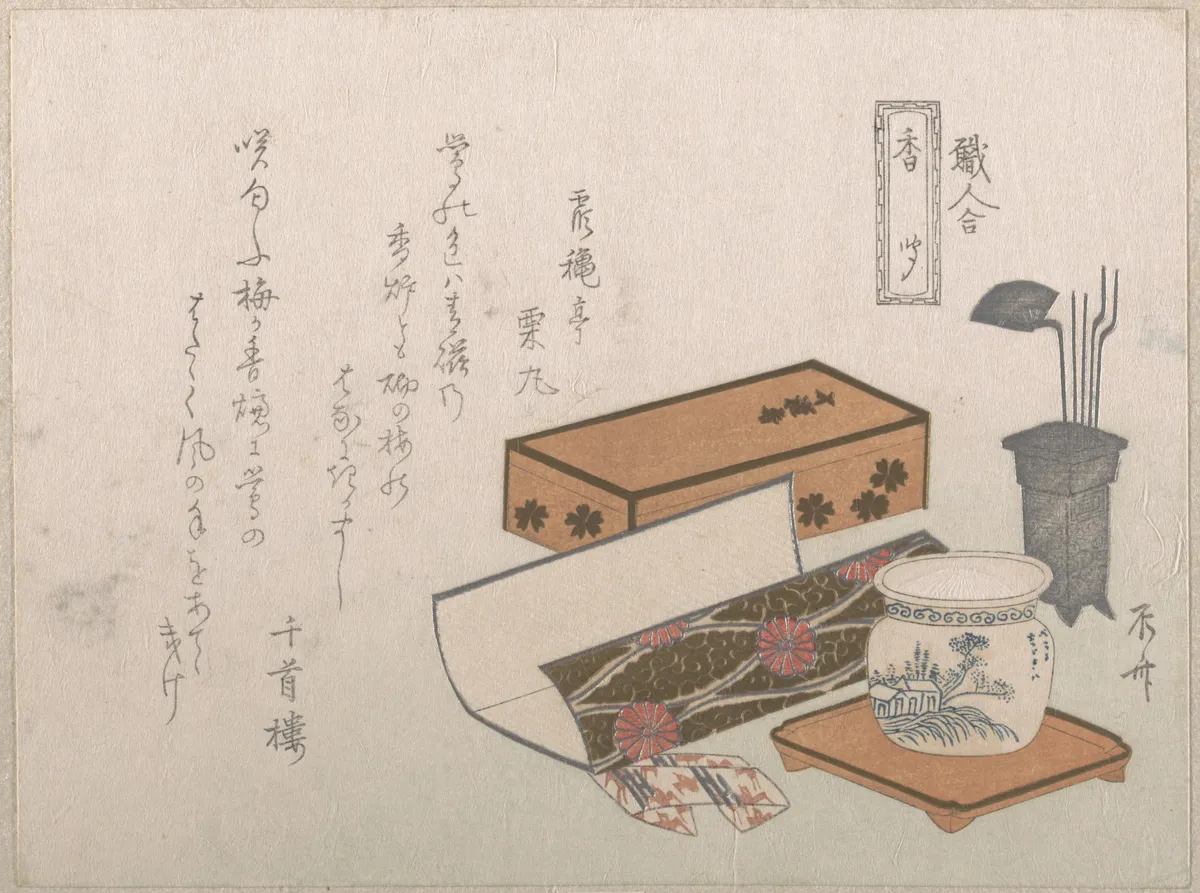
The Incense Master's Quiet Ritual
The room is hushed, filled with the faint, curling aroma of sandalwood. The Incense Master, poised and deliberate, moves with precision. His fingers brush the delicate porcelain, lifting the lid of a small, ornate container. The incense grains inside glisten like tiny jewels, waiting for the master's touch.
In the dim light, the room seems to hold its breath. The soft rustle of silk kimono is the only sound, a gentle whisper against the silence. The master selects a pinch of incense and places it on the glowing embers. A thin plume of smoke rises, its scent weaving through the air, rich and earthy.
This is not mere ceremony. It is a dance of elements, a communion with the ethereal. Each motion, each pause, is a meditation. The master's eyes, half-closed, follow the smoke's ascent. It spirals, twisting like a spirit freed from the bounds of the physical world.
The tools of his trade—bronze, wood, and porcelain—are laid out with care. Each piece is a work of art, crafted by hands that understood the sacredness of the ritual. The master's own hands, steady and sure, are the final piece of this ancient choreography.
As the fragrance deepens, the room transforms. Time slows, settles. The world outside, with its noise and bustle, fades into a distant murmur. Here, within these four walls, only the incense and its master exist.
Historical Echo
In the Edo period, incense ceremonies held a revered place in Japanese culture. They were not merely about fragrance; they were about presence, mindfulness, and the pursuit of an ephemeral beauty. Artisans like Ryūryūkyo Shinsai captured these moments, preserving the quiet dignity of the incense master. Each tool and gesture was a testament to a tradition that transcended the physical, touching the soul's quiet corners.