

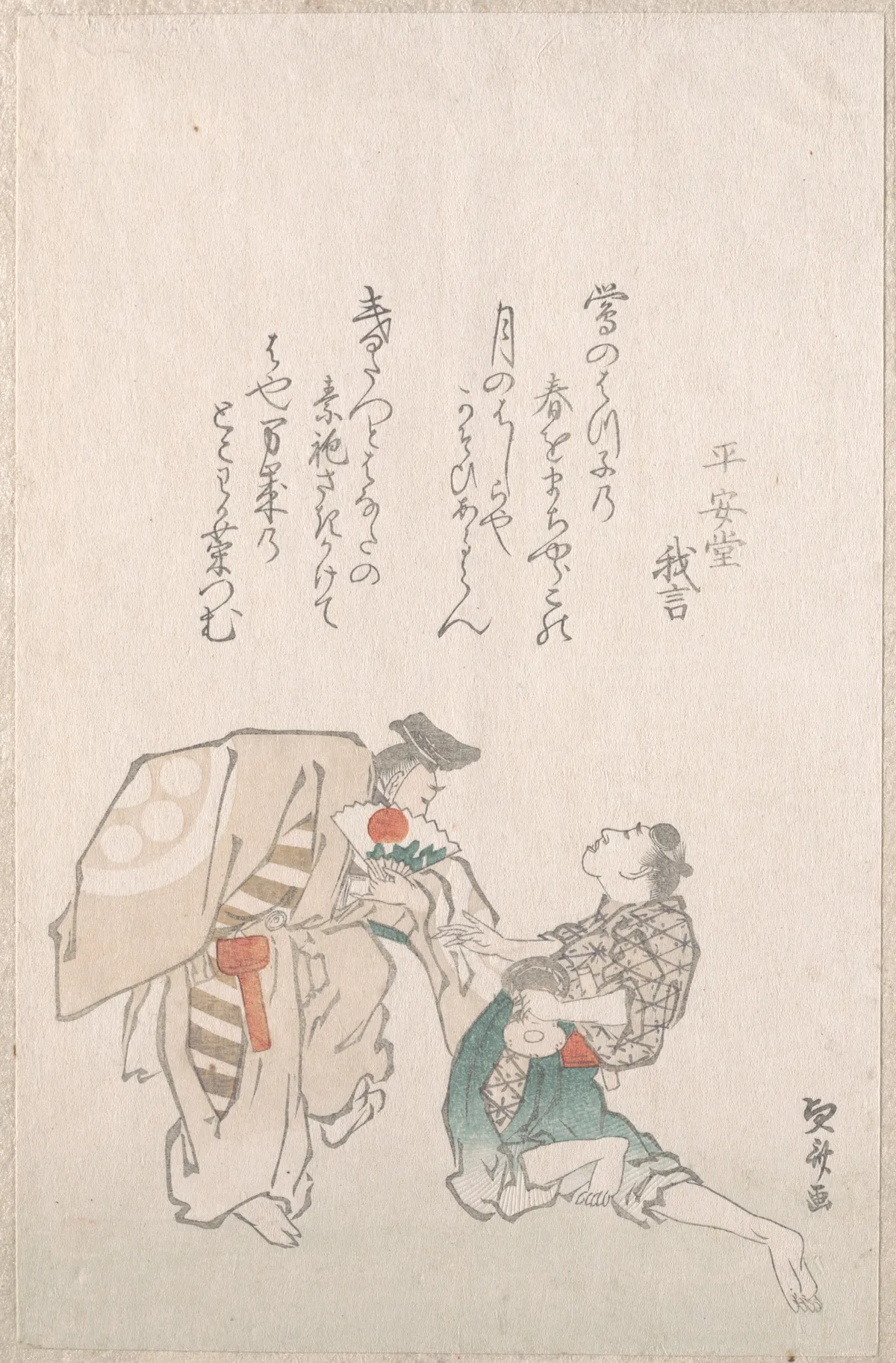
Manzai Dancers
The room is dim, the light filtered through paper screens. Two figures move with silent grace. Their feet glide over tatami mats. Each step is deliberate. The dancers wear robes of muted colours, their movements like whispers in the dusk.
A drum sounds softly, its rhythm a heartbeat. The air is heavy with incense, a faint trace of sandalwood. Outside, the wind sighs through bamboo, a gentle rustle that mingles with the rustle of silk.
Their faces are serene, painted with the pale grace of noh masks. Eyes steady, they follow the rhythm, a dance as old as the stories they tell. The room breathes with them, a living canvas of movement and pause.
The manzai dancers perform for no one but the ghosts of the past. The echoes of laughter, of applause, linger like shadows. A lantern flickers, casting fleeting silhouettes on the wall.
In this quiet space, history is not taught. It lingers, haunts, in the silence between the notes.
Historical Echo
Manzai, a traditional Japanese performance, has its roots in ancient times. Originally a comedic act, it evolved into a dance, a celebration of the New Year. Performed by pairs, it brought blessings and joy.
Teisai Hokuba, an artist of the Edo period, captures this fleeting moment. His lines are delicate, the scene intimate. Though the exact date is unknown, the essence remains timeless. Each stroke of the print whispers of festivals past, of celebrations long faded into the night.
The ukiyo-e print is a window, a glimpse into a world where every movement was a story, every pause a breath of history. The dancers remain, forever caught in their gentle rhythm, a testament to the enduring spirit of manzai.