

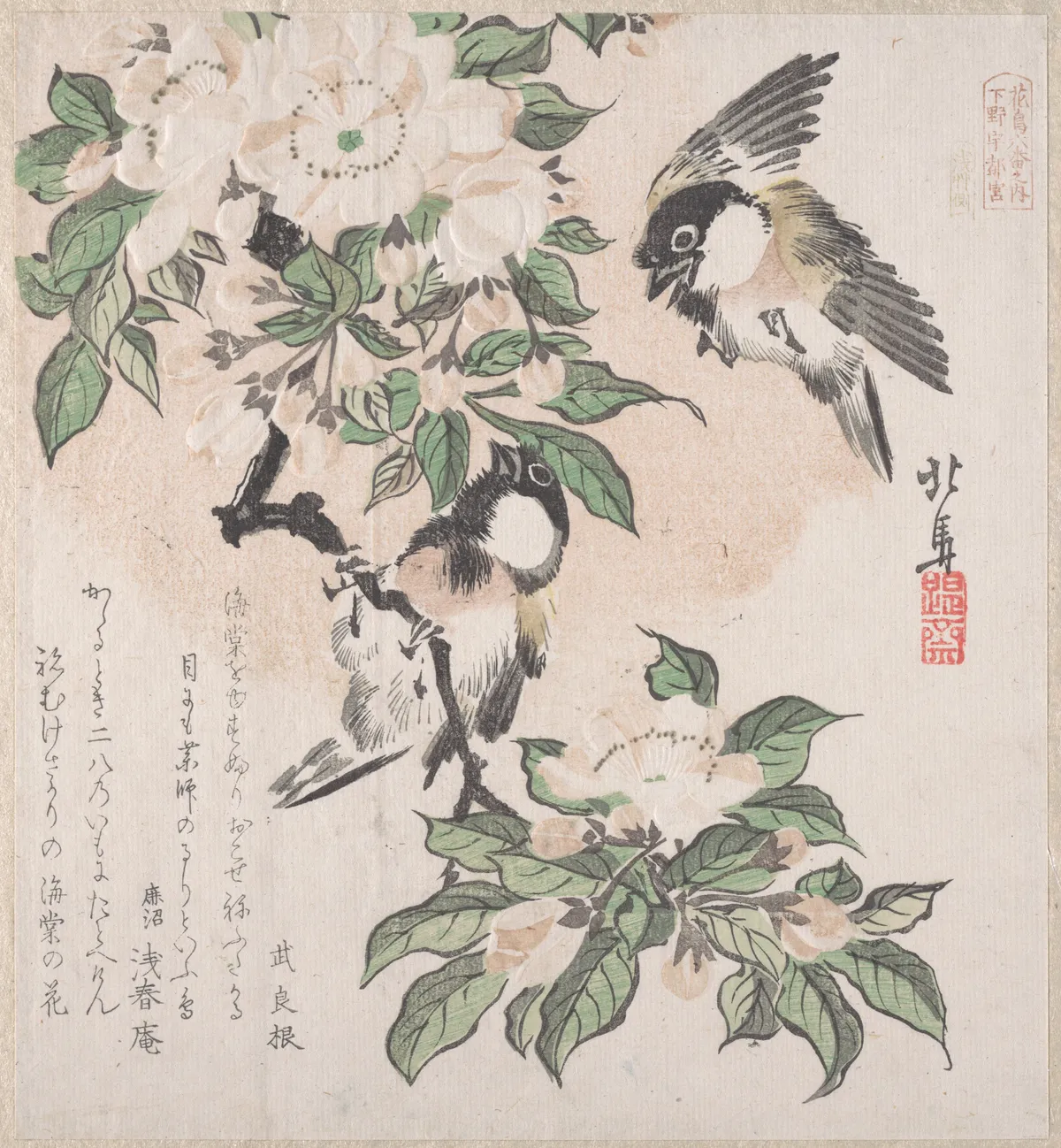
Marsh-tits in the Spring Mist
A gentle rain patters on the leaves, softening the world in a veil of mist. The air is cool, with the scent of wet earth and budding flowers. Marsh-tits flit among the crab apple branches, their feathers slick with dew. They chirp softly, voices blending with the quiet rustle of rain. The blossoms, delicate and pale, sway lightly in the breeze, their petals catching droplets like tiny crystal bowls.
The scene is serene, yet alive with subtle movement. Each marsh-tit pauses, its head tilted, listening to the whispers of spring. A gust of wind shakes the branches, scattering petals like snow upon the ground. The world seems to hold its breath, suspended in this moment of fleeting beauty.
Teisai Hokuba captures this transience with a delicate hand. His lines are gentle, yet firm, tracing the curve of each branch and the fluff of each bird. The print is a still moment, a frozen breath, capturing the essence of a spring rain.
Historical Echo
Teisai Hokuba, a disciple of the famed artist Hokusai, was known for his mastery in kachō-ga, pictures of birds and flowers. Created around 1820, this piece reflects the Edo period's fascination with nature's fleeting beauty. The marsh-tits and crab apple blossoms are symbols of spring, embodying renewal and the ephemeral nature of life. As Japan embraced new urban growth, such images provided a serene escape into the timeless rhythms of the natural world.