

Beneath the Willow
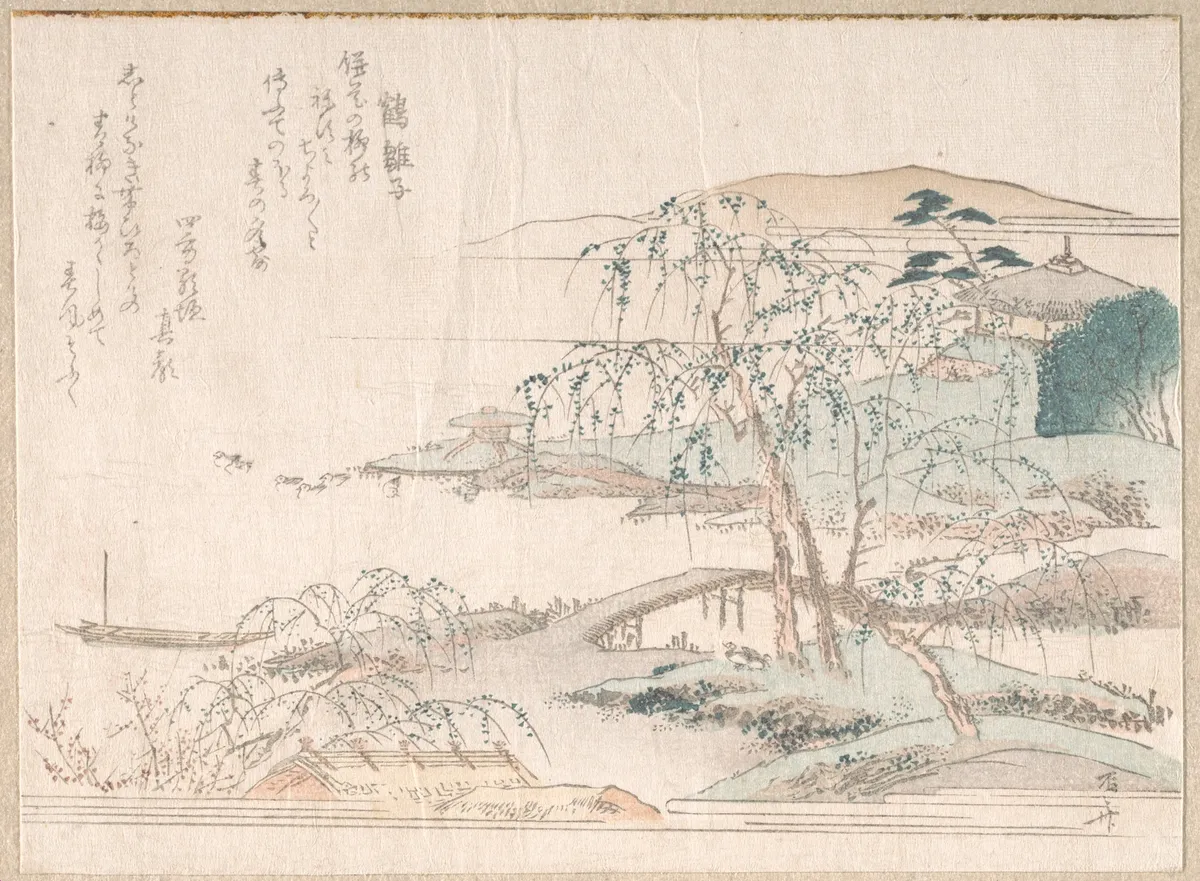
The willow branches sway gently in the wind. Their leaves whisper secrets to the river below. A narrow bridge arches over the water, its wooden planks creaking softly underfoot. The air is thick with the scent of damp earth and fresh greenery. In the distance, a lone figure stands. His silhouette is framed by the gentle curve of the willow's branches. He watches the river flow, lost in thought.
The scene is quiet. Only the rustle of leaves and the distant call of a bird disturb the silence. Sunlight filters through the leaves, casting dappled shadows on the ground. The river flows steadily, its surface catching the light in fleeting glimmers. It carries with it stories of distant places, whispering them to the willow trees that line its banks.
The man shifts his weight, the fabric of his kimono rustling softly. He is a traveller, drawn to this tranquil scene by the promise of solitude. Here, beneath the willow, time seems to pause. The world beyond the river fades into nothingness, leaving only the gentle embrace of nature.
Historical Echo
Ryūryūkyo Shinsai, a master of subtlety, captured this serene landscape in the 19th century. His woodblock print embodies the stillness and beauty of nature. During this period, landscapes became a favoured subject in ukiyo-e, reflecting a growing appreciation for the natural world. Shinsai's delicate lines and muted colours evoke a sense of peace, inviting the viewer to step into a quieter time. The willow, a symbol of grace and resilience, stands as a witness to the passage of time, its branches bending but never breaking.