

A Scent of Change
The scent of the sea lingered in the air, unfamiliar yet compelling. It carried with it the essence of another world, one that was slowly seeping into Edo. The cherry blossoms swayed gently, as if whispering secrets only they could understand.
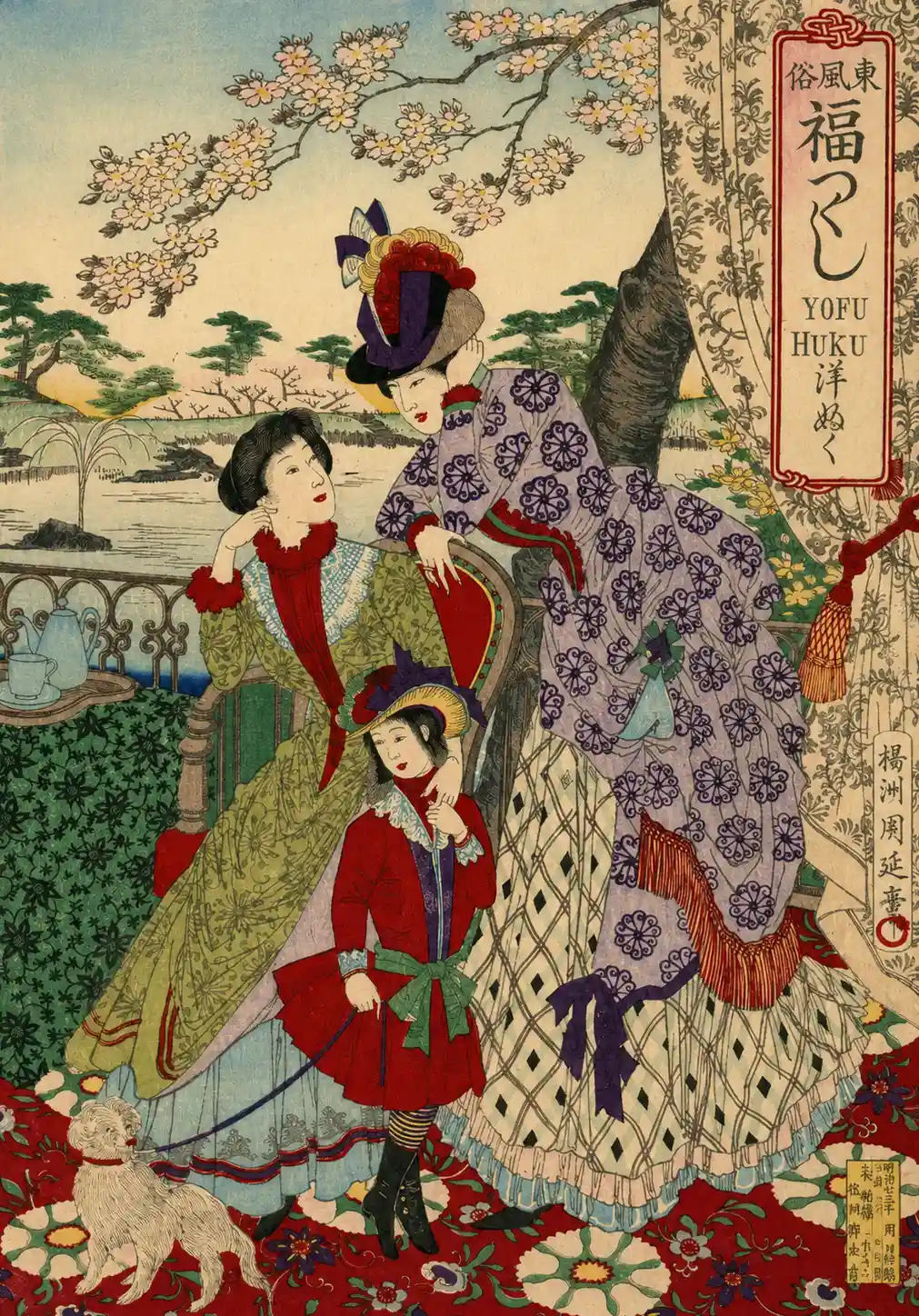
Two women sat by an iron chair, their dresses cascading like restless waves upon a crimson carpet. The rich patterns beneath their feet were foreign, almost too opulent for this setting. It was as though pieces of Yokohama had unfurled within this space, bringing with them the whispers of distant lands.
The woman in a violet gown leaned forward, her ribbons fluttering with the breeze. Her gaze seemed to drift beyond her companion, past the quiet pond and the stoic pine trees. Out there, amidst the spring haze, black ships lingered, harbingers of change.
Japanese women now donned corsets and hats, their garments infused with imported fabrics and scents. Yet, beneath these layers, they still harboured silence, keeping it nestled deep within their sleeves like a hidden prayer.
A child stood between epochs, her small hand gripping the leash of a white dog. The dog's nose quivered, capturing the mingled aromas of coal smoke, salt, machine oil, and the lingering traces of foreign perfumes. Her boots, new and stiff, pressed awkwardly into the carpet's floral design.
Only the cherry branch above remained untouched by time's relentless march. It stretched defiantly, unchanged, above a nation that was shifting beneath its blooms.
At night, in Yokohama, sleep became elusive. Some took to learning English by flickering lantern light. Others shed their ancestral topknots, while many glimpsed steamships for the first time. There was fear, a new and unfamiliar companion, as the reality of a world beyond the sea settled in.
The quiet ones were always the first to sense history's tremors, to hear the subtle crack as one era gave way to another.
Historical Echo
In the late 19th century, Japan was undergoing a profound transformation. The Meiji Restoration had opened its doors to Western influences, leading to a cultural and societal metamorphosis. Artists like Yōshū (Hashimoto) Chikanobu captured these changes in their work, often focusing on the contrast between traditional Japanese customs and the burgeoning Western styles. This print, part of Chikanobu's series on Eastern Japan’s customs, reflects the period's transitional atmosphere. The depiction of women in Western attire amidst traditional settings symbolizes the blending of cultures and the inevitable march of modernity.