

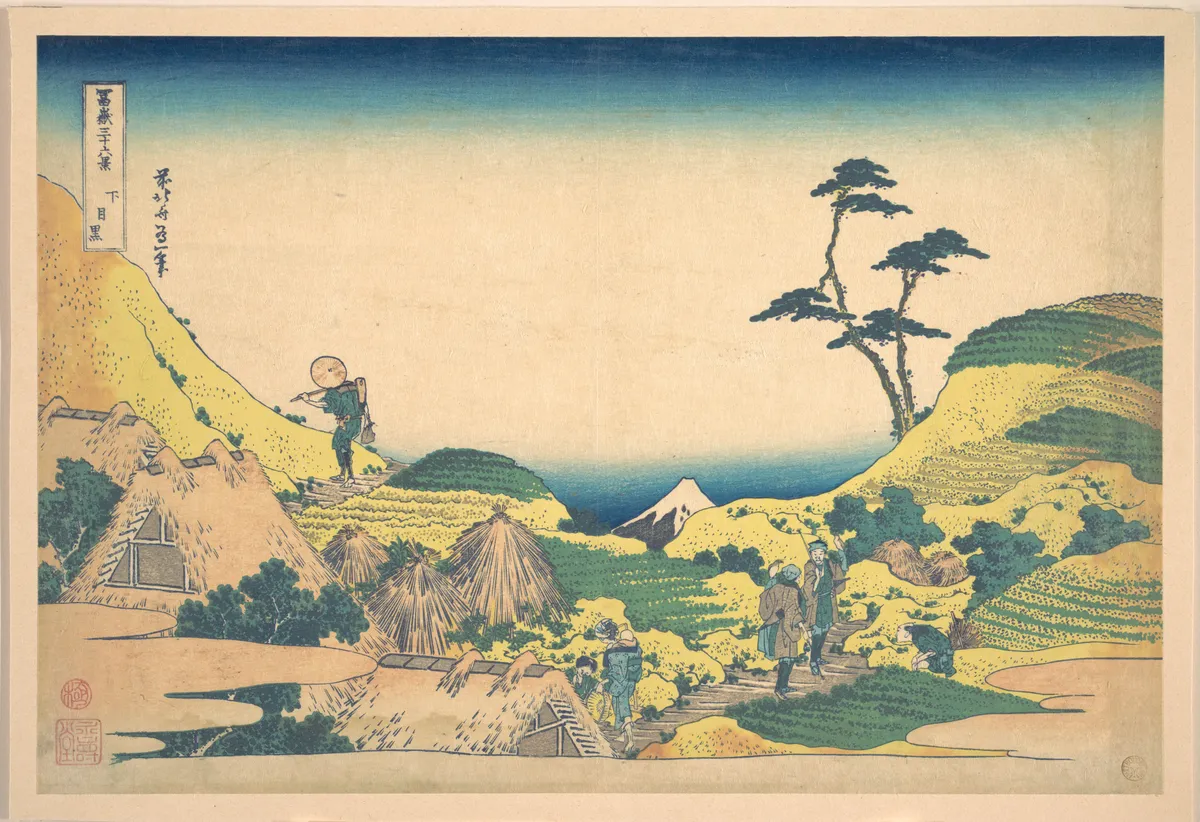
Lower Meguro
The air feels heavy with the promise of rain. A quiet river snakes through the village of Lower Meguro. Pine trees stand like sentinels along its banks. Each breath carries the scent of wet earth and distant mountain air. Hokusai captures this moment. A bridge arches gracefully over the water. Its wooden planks creak under the weight of unseen footfalls. Villagers move slowly, their figures outlined against the greying sky.
Mount Fuji looms in the background, a silent guardian. Its peak is shrouded in clouds, only half revealed. The scene breathes with an intimate stillness. Life here flows at the river's pace. Soft whispers of wind stir leaves. Lanterns flicker in doorways, casting warm circles of light on the ground.
This is Lower Meguro's heartbeat—a place where time pauses, held in the delicate balance of nature and man's gentle presence. Hokusai's brush immortalises the moment. His lines tell stories unspoken, histories untold. The echoes of footfalls on the bridge fade. Silence returns. The river continues its quiet journey. So does the viewer's eye, tracing the contours of this serene world.
Historical Echo
Katsushika Hokusai, an artist of quiet brilliance, captured the spirit of Edo Japan. This print forms part of his series, "Thirty-six Views of Mount Fuji," created around 1830–32. It reflects Hokusai's fascination with the interplay of nature and daily life. Lower Meguro was a tranquil locale on the outskirts of Edo, now Tokyo, known for its scenic beauty and the ever-present silhouette of Mount Fuji. Through Hokusai's lens, the ordinary becomes timeless, each element meticulously carved and printed to evoke a world both intimate and vast. His work endures as a testament to the enduring beauty of Japan's landscapes and the lives lived within them.