

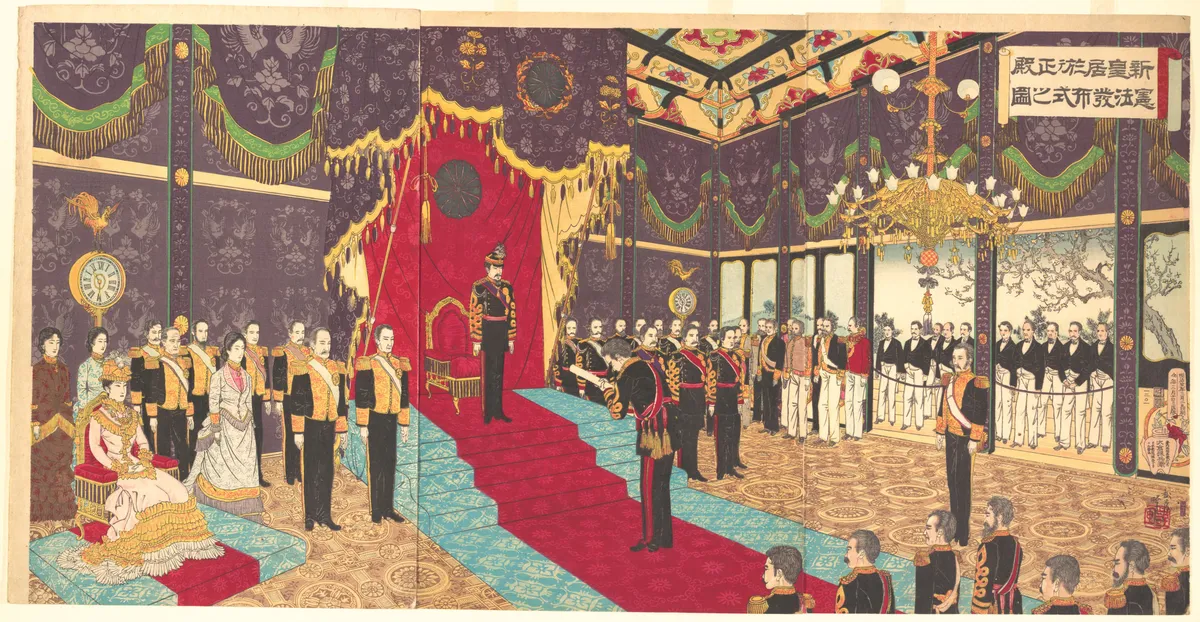
The State Chamber's Hushed Reverence
The air in the State Chamber was thick with anticipation. Shadows clung to the corners, cast by the flicker of lanterns. Rows of dignitaries, their silhouettes stark against the pale walls, sat in rigid silence. The weight of history pressed heavily upon their shoulders.
The ornate chamber was alive with the soft rustle of silk. Robes whispered as officials shifted in their seats, the quiet sound magnified in the stillness. Outside, the wind sighed against the palace walls, a distant murmur of the world beyond.
Adachi Ginkō captured this moment, the gravity of the Meiji era's transformation etched into the woodblock's lines. It was March 2, 1889, the day the State Constitution was unveiled. The atmosphere was steeped in solemnity, a new chapter inked in the annals of Japan.
The Emperor's presence was a quiet force, felt rather than seen. His voice, when it came, was a calm ripple through the room. The words of the Constitution carried the weight of change, resonating in the chamber's hallowed space.
As the ceremony concluded, a collective breath was released, a gentle sigh that marked the passage from tradition to modernity. The chamber, once again, settled into silence, holding the echoes of history within its walls.
Historical Echo
The issuance of the Meiji Constitution was a pivotal moment in Japan's history. It marked the transition from feudal governance to a constitutional monarchy. Adachi Ginkō's artwork immortalises this historic scene, capturing the tension and solemnity of the occasion. The State Chamber of the New Imperial Palace serves as a backdrop, a symbol of the nation's evolving identity. The Constitution laid the foundation for modern Japan, echoing the shift from isolation to a burgeoning presence on the world stage.