

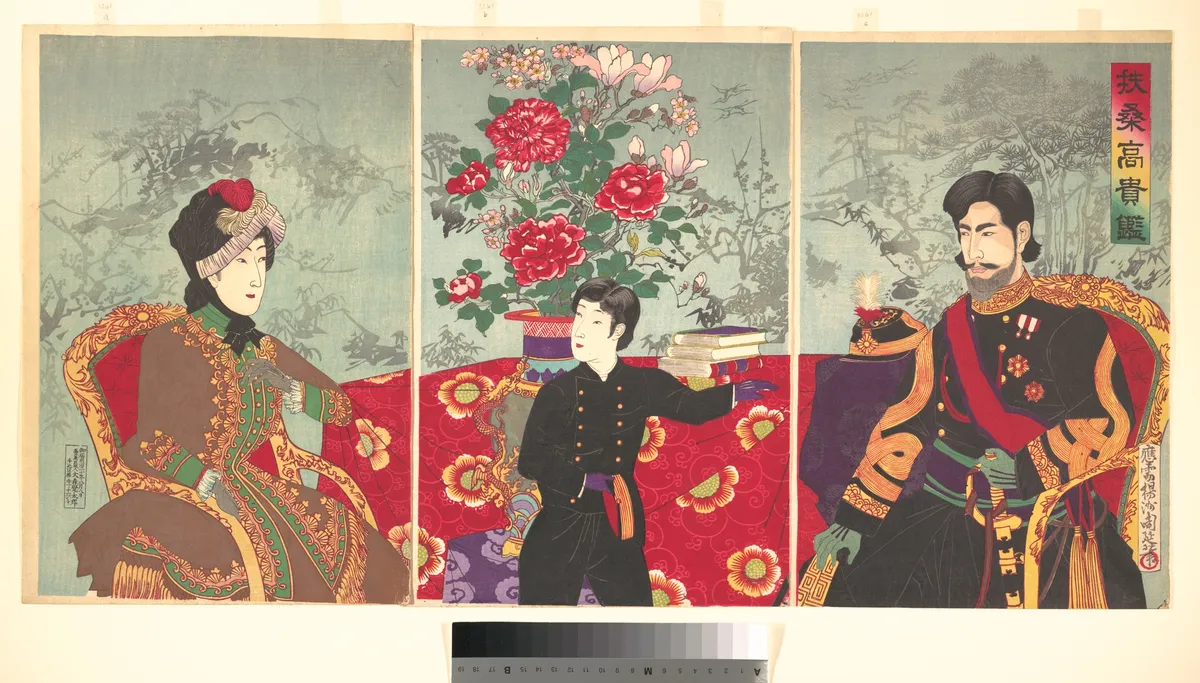
A Mirror of Japan’s Nobility
Rain pattered softly against the paper windows. Inside, a gentle hush enveloped the room. Layers of silk rustled as noblewomen adjusted their kimonos. The air was thick with the scent of incense, curling in delicate wisps. Each woman, poised, held the weight of centuries in her gaze.
Their movements were slow, deliberate, like a dance rehearsed through generations. Gold-threaded obi tied with precision, lacquered hairpins glinting in dim light. A mirror reflected their faces—stoic, yet tender. Outside, a garden lay shrouded in mist, each leaf heavy with rainwater.
Footsteps echoed faintly in the corridor. A servant, head bowed, entered with a tray. The clink of porcelain cups briefly disturbed the silence. Tea, warm and fragrant, filled the room with a comforting aroma. The women spoke in hushed tones, words measured and sparse.
In this restrained world, each glance, each gesture, carried the weight of unspoken histories. The rain's rhythm outside matched the beating of their hearts, steady, unchanging.
Historical Echo
Yōshū (Hashimoto) Chikanobu captured an era on the brink of transformation. In 1887, as Japan straddled ancient tradition and modernity, Chikanobu's print stood as a testament. It mirrored an aristocracy both revered and fading. The elegance of these noblewomen, set against a backdrop of change, immortalised a moment poised on the edge of history.