

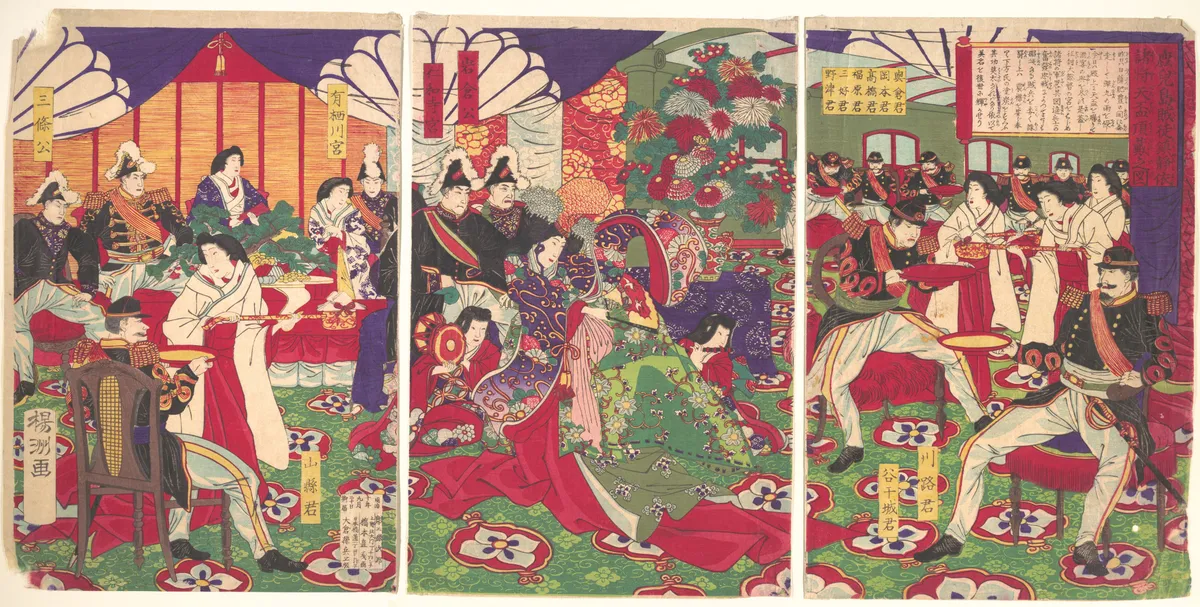
A Quiet Celebration
The air is heavy with the scent of incense. Lanterns flicker softly, casting shadows on the tatami mats. The room hums with a quiet murmur. Elderly generals, their faces lined with the weight of command, sit cross-legged. Each holds a delicate cup of sake, a token from the Emperor himself.
Their garments rustle softly as they shift. Silk robes, heavy with embroidered crests, speak of battles fought and won. Outside, the night is still. Only the distant rustle of leaves disturbs the silence.
Chikanobu's brush captures this moment of solemnity. Wine reflects the dim light, a pool of liquid gold cradled in porcelain. The generals' eyes, downcast, are lost in memory. They remember the clash of steel, the cries that pierced the air, the scent of gunpowder mingling with the sea breeze.
A servant moves silently, refilling cups with practiced grace. The generals nod in unison, a silent toast to survival, to victory. The room is filled with the unspoken, the weight of history pressing against the walls.
Historical Echo
In September 1877, Japan was at the cusp of change. The Satsuma Rebellion had ended, marking the decline of the samurai class. The leaders gathered here had quelled the uprising, restoring order at the Emperor's behest. Yōshū Chikanobu captures this moment in time, an echo of Japan's delicate transition from feudal past to modern future.