

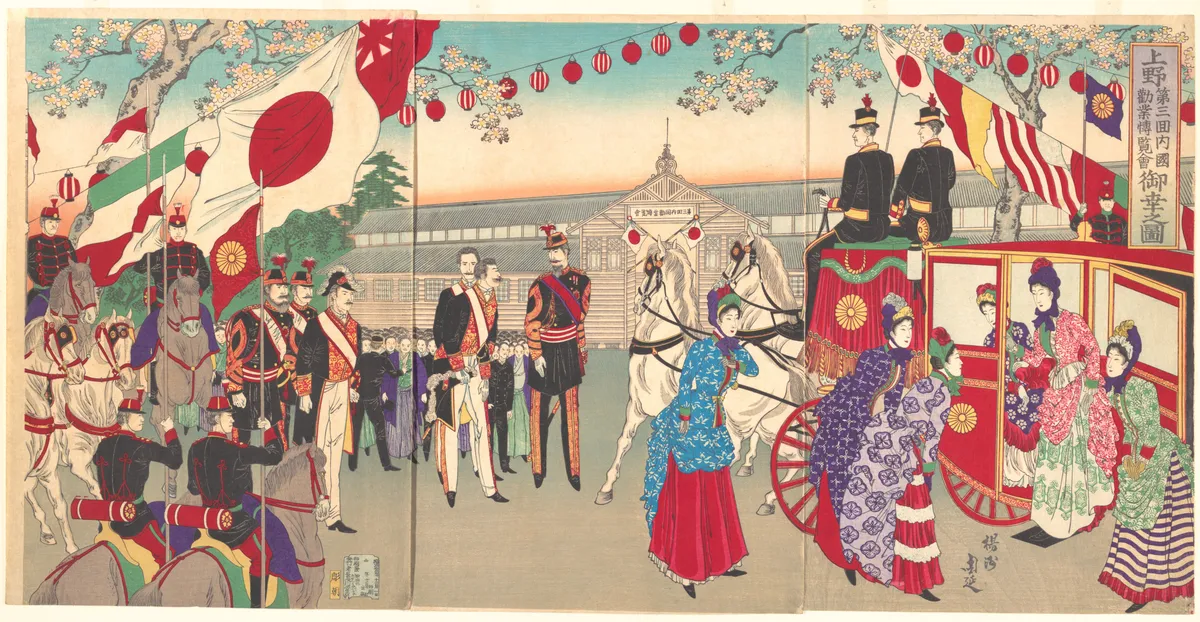
The Empress’ Visit
The air felt heavy with anticipation. Ueno Park thrummed quietly beneath the Empress’s procession. Lanterns flickered, their light subdued by the afternoon haze. The crowd held its breath, a sea of expectant faces. A rustle of silk, the soft clatter of wooden shoes on gravel, marked the Empress's approach. Her presence was a whisper of elegance amid the grand exhibition.
Stalls brimmed with innovation. Steam engines, textiles, and delicate porcelain gleamed under the watchful gaze of their creators. The scent of fresh lacquer and polished metal hung in the air. Beneath the awnings, shadows played on the ground, mirroring the intricate patterns of the wares.
The Empress paused, her gaze sweeping over the displays. An attendant leaned in, a murmured explanation breaking the reverent silence. Her nod was slight, yet it rippled through the onlookers—a pebble in a still pond. The procession moved on, leaving behind a trail of whispered admiration.
Children clutched their mothers' hands, eyes wide with wonder. A vendor called out, his voice swallowed by the murmurs. The park, a blend of nature and human achievement, seemed to hold its breath, waiting for the next chapter to unfold.
Historical Echo
In 1889, Japan stood on the cusp of transformation. The Third National Industrial Exhibition symbolised progress and ambition. Ueno Park, a cultural heart of Tokyo, became a stage for this display. The Empress's visit was more than ceremonial; it was a nod to a modernising nation. Yōshū Chikanobu captured this moment, blending tradition and innovation, as Japan looked both backward and forward. The print remains a testament to an era of change, where past and future mingled under the watchful eyes of the Empress.