

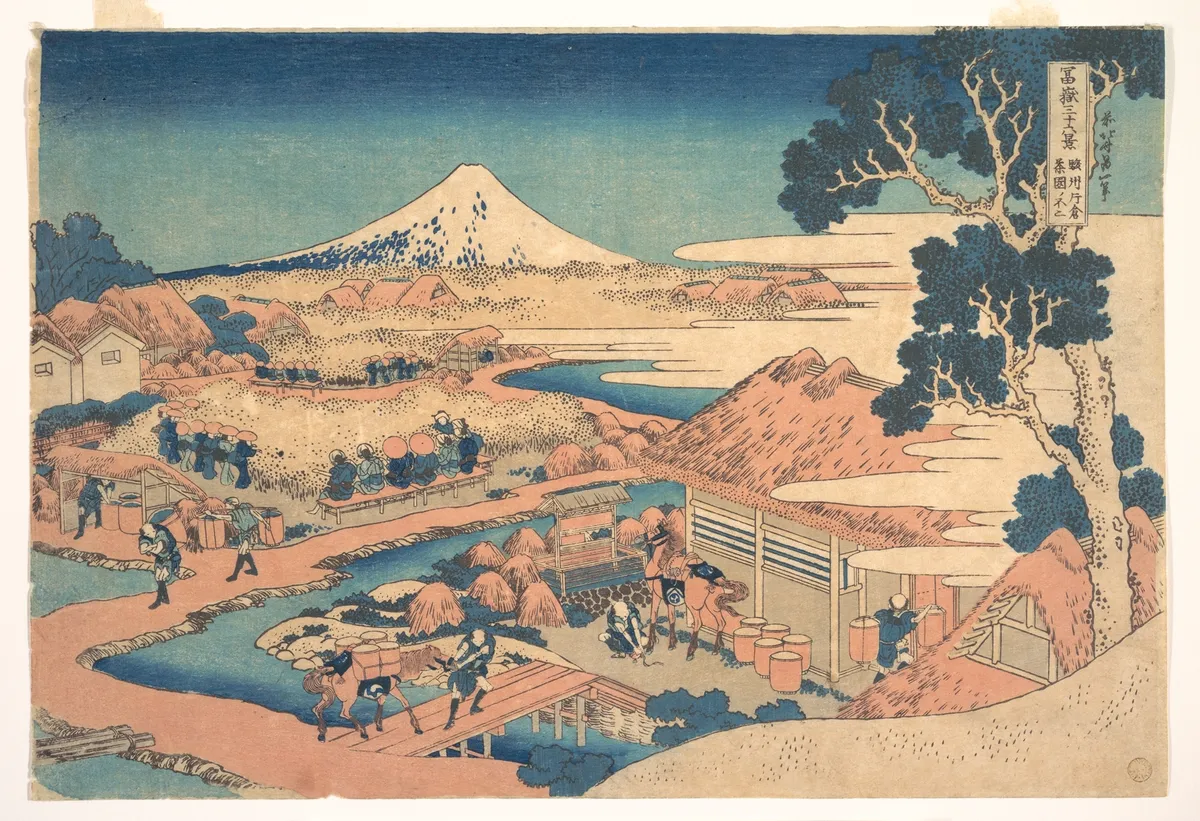
In the Tea Fields' Silence
The air is thick with morning mist. It clings to the leaves of the tea plants, shimmering like dew. Workers move silently among the rows, their heads bowed, hands deftly plucking. The soft rustle of leaves fills the heavy air.
In the distance, Mount Fuji looms, a silent guardian shrouded in pale blue. Its presence is felt more than seen, hovering like a whisper on the horizon. The mountain's snow-capped peak pierces the sky, a stark contrast to the rolling green fields below.
A slight breeze stirs, carrying the scent of earth and fresh tea leaves. A child, small and curious, pauses from her task. She looks up at the majestic mountain, eyes wide with wonder. Her fingers brush against the leaves, feeling their cool, waxy texture.
The sun begins to rise, casting a golden light over the landscape. Shadows stretch long and thin, merging with the lines of the cultivated earth. The world feels suspended, hanging in the balance between night and day.
The workers continue their rhythm, undisturbed by the quiet magnificence. Their bodies move in harmony with the land, an unspoken dance passed down through generations. The mountain watches over them, an eternal witness to their toil and dreams.
Historical Echo
In the early 1830s, Katsushika Hokusai captured the serene beauty of Mount Fuji in his famed series "Thirty-six Views of Mount Fuji." This print, depicting the tea fields of Suruga, embodies the harmony between nature and human labour. Hokusai's work illustrates not just landscapes but the spirit of an era, where the land and its people were inextricably linked. The tranquillity of the scene belies the industriousness of the workers, framed by the majestic presence of Fuji, a symbol of enduring strength and permanence.