

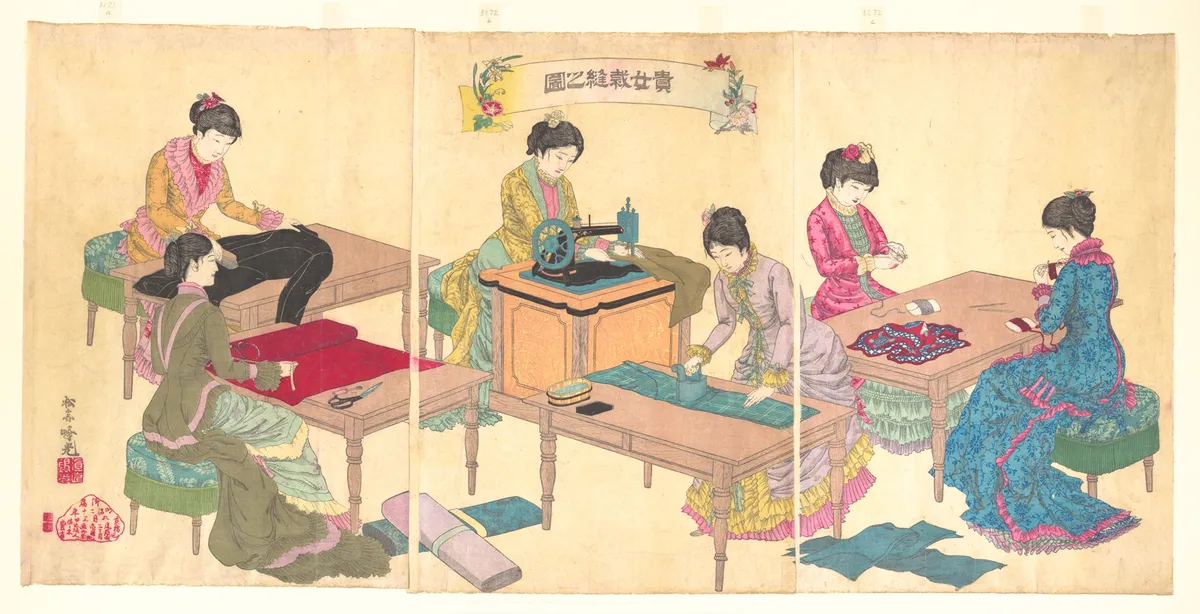
Ladies Sewing
In the dim glow of a single lantern, the room hums with quiet concentration. Three women sit on tatami mats, their fingers deftly weaving thread through fabric. The air is thick with the scent of fresh cotton and the faint rustle of silk. Shadows dance along the wooden walls, echoing the gentle rhythm of needle and thread.
Their kimonos, soft and muted in colour, seem to absorb the warmth of the room. Each movement is deliberate, each stitch precise—an unspoken language of care and tradition. The youngest among them pauses, her gaze drifting to the paper screen where moonlight filters through, casting delicate patterns on the floor.
Outside, a cricket's song pierces the stillness, harmonising with the soft sighs of fabric. Time stretches, suspended in the quietude of their labour. The women share no words, only the silent understanding of shared craft.
As night deepens, their world becomes a cocoon of whispered stories and ancestral skills. The lantern flickers, casting brief moments of brightness in the hushed space. For these women, each stitch is a link to the past, a promise to the future.
Historical Echo
In late 19th century Japan, the art of sewing was often a communal activity among women, a time for bonding and learning. Adachi Ginkō captures this intimate scene, reflecting the enduring tradition of domestic craftsmanship. The focus on textiles and the act of sewing highlights the cultural significance of clothing and the meticulous skills passed down through generations.