

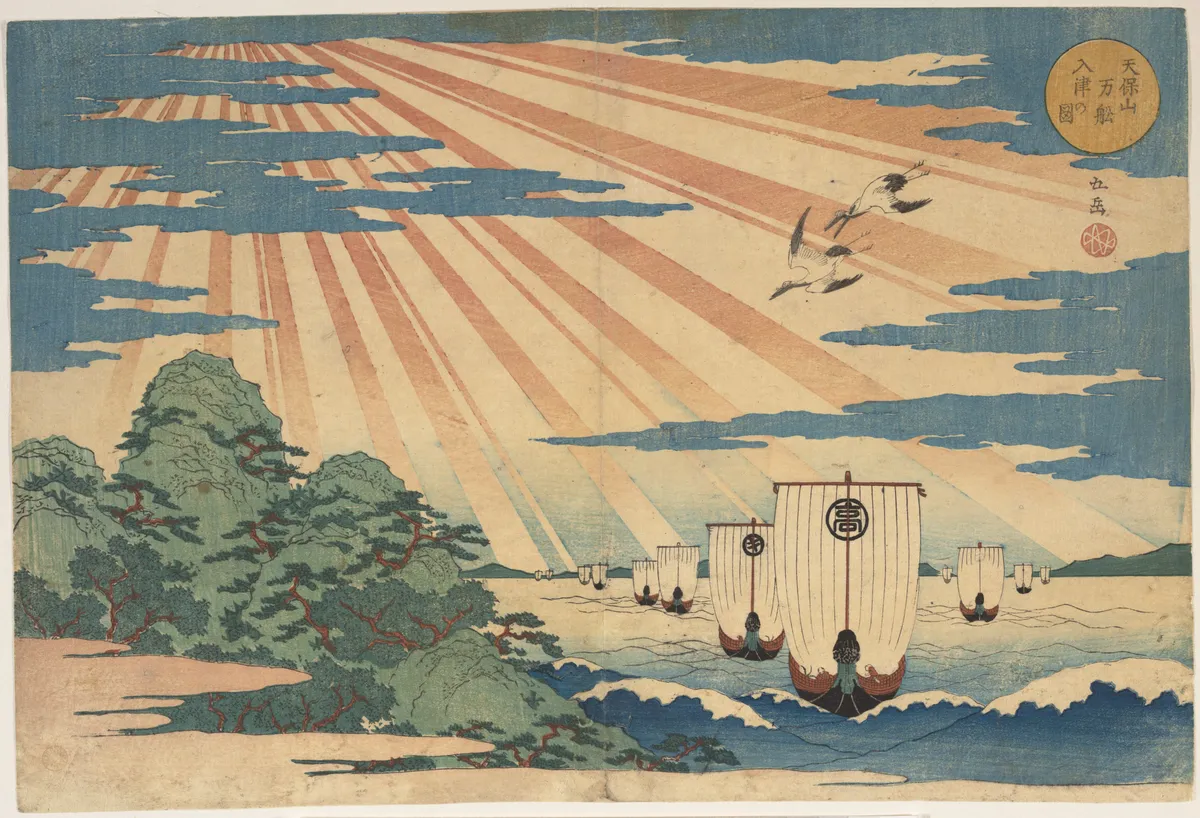
The Silent Passage
The air is heavy with the scent of salt. A faint mist clings to the water's surface. In the distance, the silhouette of Tempozan looms. Shadows stretch and dance across the deck as sailors move with quiet purpose. Their feet thud softly against the aged wood.
A lantern sways gently, casting flickering light on the faces of passengers. Their expressions are muted, eyes drawn to the horizon. The soft lapping of waves against the hull provides a steady rhythm. An elderly man adjusts his straw hat, its brim worn and frayed. He clutches a small bundle, wrapped in faded cloth.
Nearby, a young woman stands, her kimono rustling in the breeze. Her gaze is fixed on the receding shoreline. Behind her, a child tugs gently at her sleeve, whispering questions that fade into the sound of the sea.
The light wanes, and the world seems to hold its breath. Each moment stretches, suspended between past and present. The ship continues its silent passage, a small world adrift in twilight.
Historical Echo
In 1838, Yashima Gakutei captured this serene voyage with delicate precision. The print reflects a period when travel by sea was both a necessity and a quiet adventure. Tempozan, a man-made hill in Osaka, served as a landmark for those setting sail. Gakutei's work, rooted in the tradition of ukiyo-e, embraces the transient beauty of such journeys.