

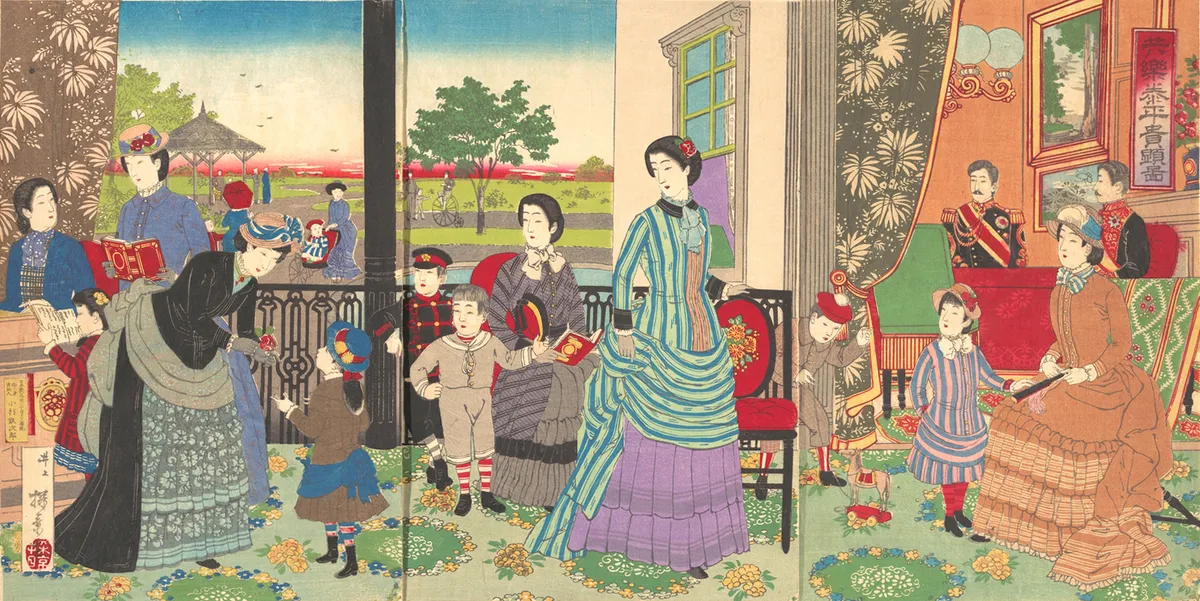
Peaceful Pleasures of the Highest Nobility
The garden whispers with a quiet dignity. The air is still, carrying the faint scent of pine and damp earth. A lone crane stands by the water's edge, its reflection rippling in the pond. Noble figures gather under the shade of a cherry tree, its blossoms a gentle pink against the soft sky. Their robes rustle softly as they move, silk brushing against silk, a symphony of muted colours and subtle patterns.
A young noblewoman sits gracefully, her fingers tracing the rim of a delicate porcelain cup. The tea inside steams gently, its warmth a comforting presence in the cool evening air. Her eyes follow the path of a paper lantern as it floats across the pond, its light flickering like a distant star.
Nearby, an elder statesman strokes his beard, eyes half-closed in contemplation. The weight of years sits upon him like a well-worn mantle. He listens to the distant sounds of a koto, each note a drop of serenity in the evening hush.
In this tranquil moment, the world beyond fades into silence. The peace of the garden holds them, a brief respite from the burdens of rank and duty. Here, amidst the gentle embrace of nature, they find solace in simplicity and grace. Time slows, and they are content to linger in this fleeting realm of quiet pleasures.
Historical Echo
In 1887, Japan stood on the cusp of transformation. The Meiji era brought change, blending ancient traditions with modern aspirations. Inoue Yasuji captured this delicate balance, presenting a world where nobility sought peace amidst shifting sands. His work, a window into an era of elegance and transition, speaks of the timeless human desire for harmony and beauty.