

Silent Machines
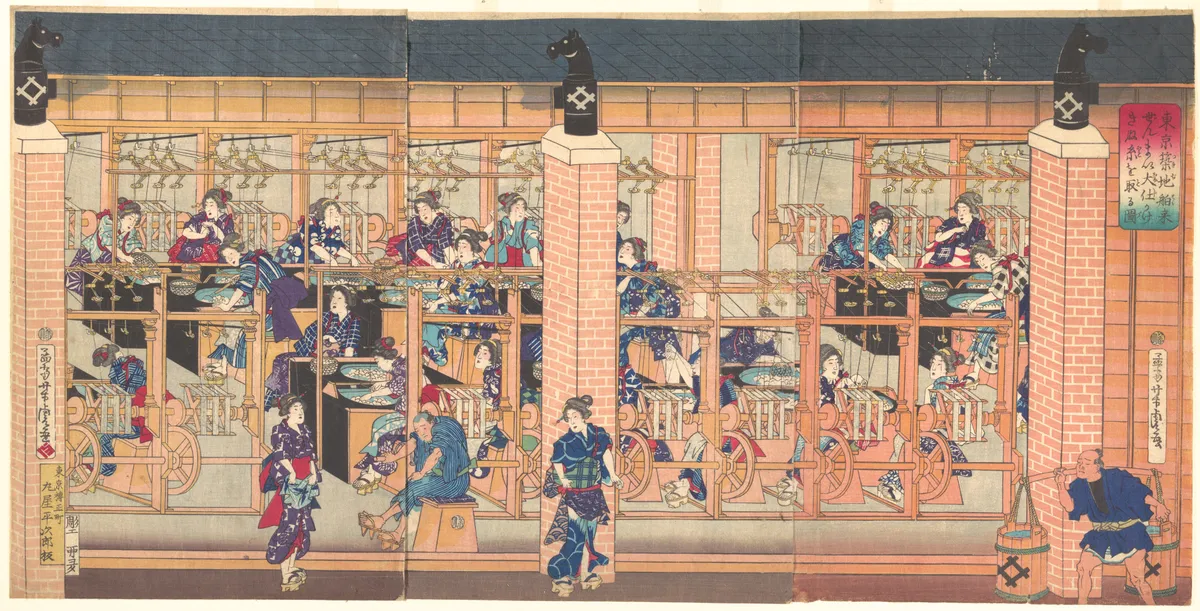
The air is thick with the scent of fresh wood and metal. Workers move silently, their shadows long and graceful, against the glow of gas lamps. The silk reeling machine stands at the centre, its imported body an oddity in Tsukiji's heart. It hums, a low, continuous murmur, weaving threads as delicate as the morning mist.
Around it, men and women watch with cautious eyes. The machine's rhythm is foreign, like a strange heartbeat. Hands, calloused from years of manual labour, now guide the silk with reverence and uncertainty. The once familiar clatter of hand tools is replaced by this mechanical whisper, a sign of change, of progress.
Outside, the city sleeps under a veil of modernity, as rickshaws creak along silent streets. The scent of sea brine drifts through open windows. The old and the new coexist here, in uneasy harmony. In the factory, the machine's song continues, a lullaby for an age on the brink of transformation.
Historical Echo
In 1872, Tokyo stood on the edge of the future. The Meiji Restoration had begun to reshape an ancient world. The Tsukiji district, once a quiet part of Edo, now pulsed with industry and innovation. Western technology arrived, altering the landscape and the soundscape.
Utagawa Yoshitora captured this tension, this juxtaposition, in his work. The imported silk reeling machine symbolised more than efficiency. It was the harbinger of a new era, a silent revolution within the wooden walls of a Japanese factory. This print stands as a testament to the moments when history turned, not with a shout, but with a whisper of machinery.