

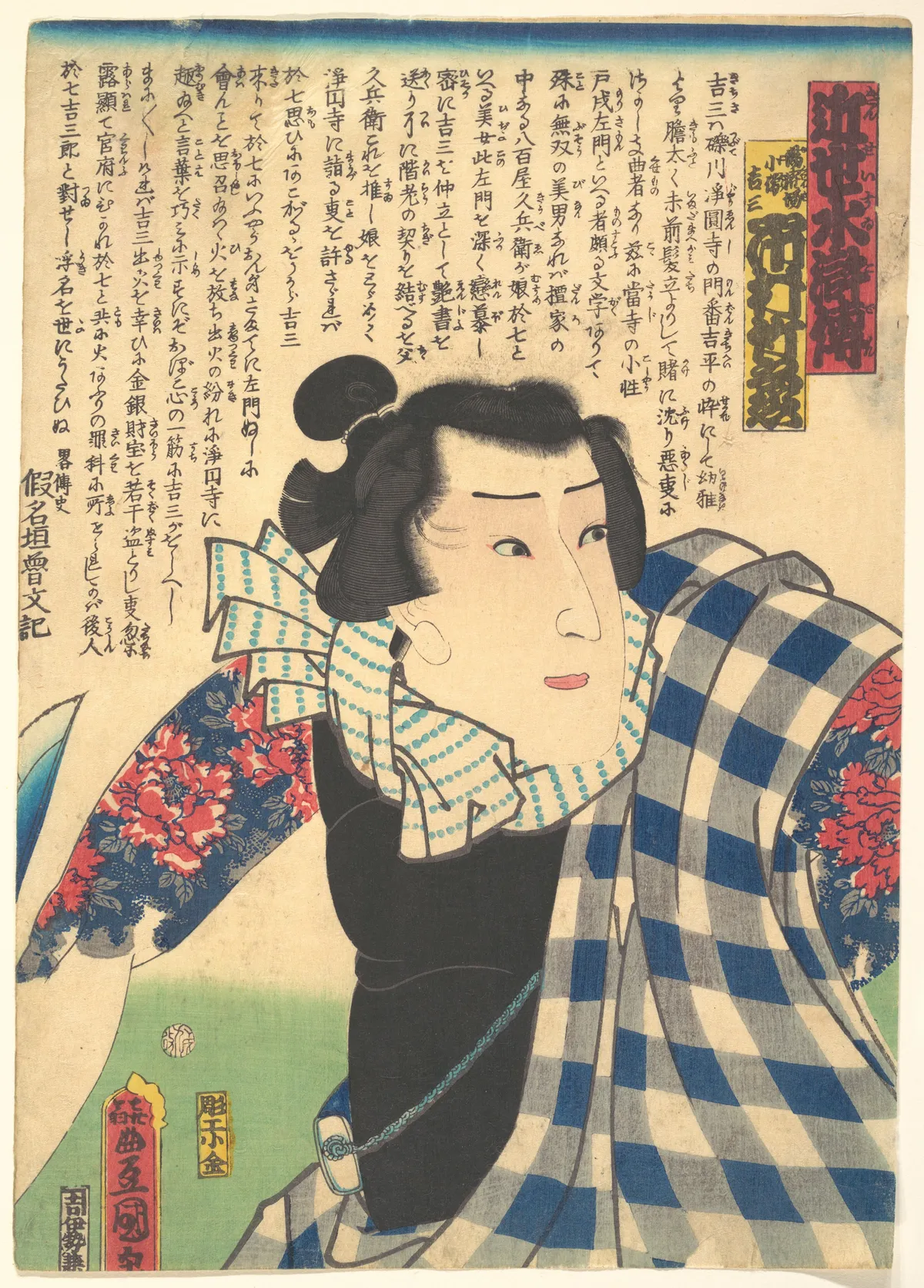
The Lantern's Gaze
The lantern swayed gently, casting long shadows on the wooden floor. Yukanba Kozō Kichiza stood there, his eyes sharp, his presence commanding. The air was thick with the scent of ink and old paper, mingling with the soft rustle of silk robes. Kichiza’s hand gripped the hilt of his sword, fingers brushing the worn leather.
Outside, rain whispered against the roof tiles, a steady rhythm that echoed the tension in the room. Kichiza’s gaze was fixed on something beyond the darkness, a world only he could see. His expression spoke of unspoken promises and the weight of unshed tears.
The dim glow from the lantern flickered, illuminating the intricate patterns on his kimono. It clung to him, a second skin that bore the marks of a life lived in shadows. The silence was almost tangible, broken only by the distant sound of a shamisen, its mournful notes drifting through the night air.
In the stillness, memories stirred—of battles fought, of allies lost, of a path carved through honour and betrayal. The past was a shadow that danced in the flickering light, a ghost that lingered at the edge of perception.
Kichiza’s breath was steady, a quiet defiance against the encroaching night. He was a figure caught between worlds, a man of flesh and blood bound to paper and ink. Yet in this moment, he was more than a character—he was a legend, etched into the very fabric of time.
Historical Echo
In 1862, Utagawa Kunisada captured the essence of Ichimura Takenojō V as Yukanba Kozō Kichiza. This woodblock print, part of "A Modern Water Margin," breathes life into the kabuki stage. Kunisada, a master of yakusha-e, immortalised actors through vivid portrayals. The piece reflects Edo's vibrant theatre culture, where stories of heroism and tragedy unfolded under the glow of paper lanterns.