

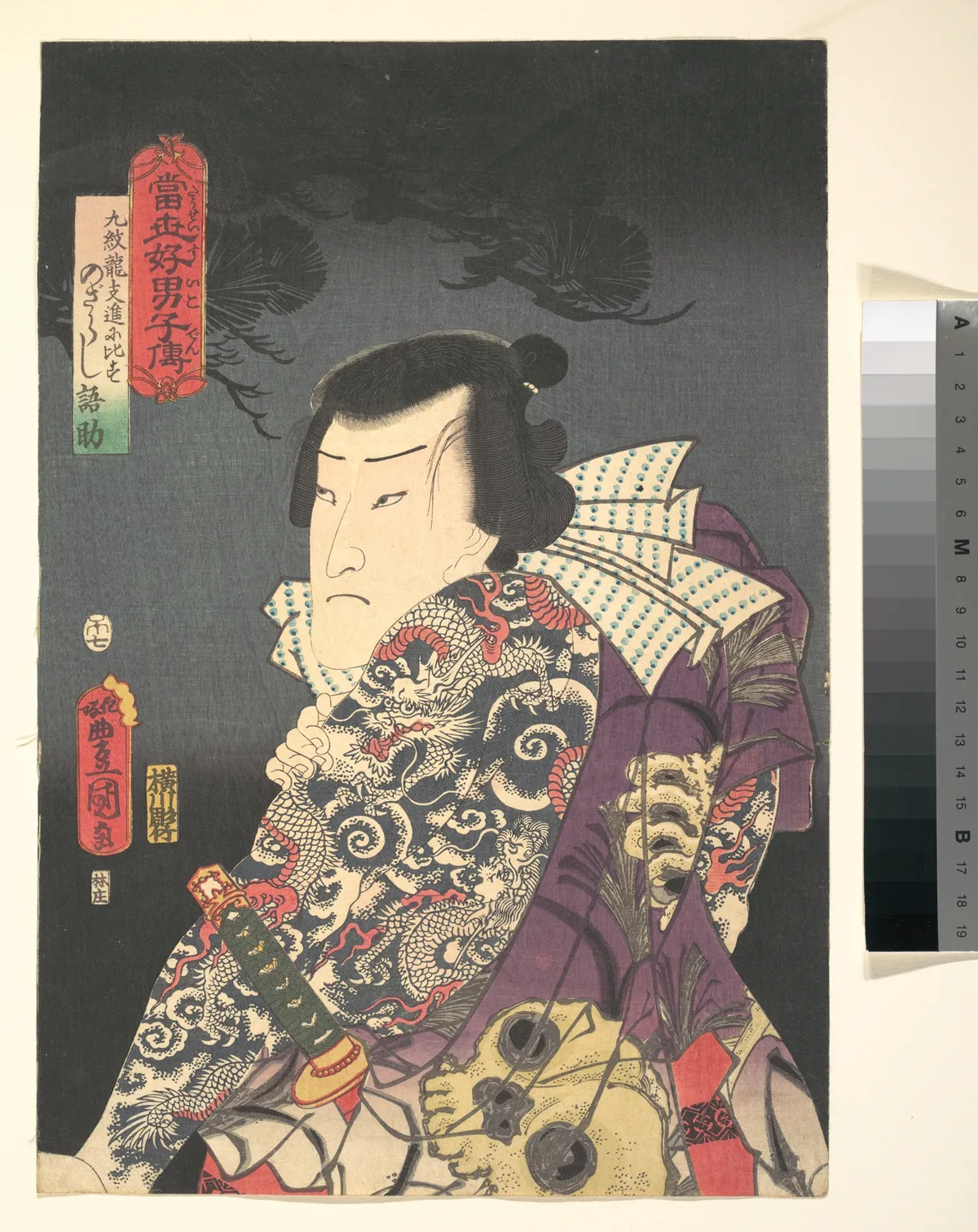
The Nine Dragons' Shadow
A cold breeze weaved through the theatre, carrying whispers of anticipation. On stage, Ichikawa Ichizō III stood as Nozarashi Gosuke, a figure steeped in myth, his silhouette sharp against the dim lantern light. His robe, heavy with the weight of legends, bore the mark of Nine Dragons. The air was thick with incense, mingling with the scent of lacquered wood.
The audience, shadows merging with the darkened hall, sat in silence. Their eyes followed Gosuke, a bandit likened to Shi Jin, the storied hero. His movements were deliberate, echoing the cadence of a distant drum. Each step on the tatami floor reverberated, a soft thud that filled the room with tension.
Gosuke's gaze, piercing yet calm, swept over the sea of faces. Behind him, pine branches swayed gently, as if echoing the tale of strength and redemption. The sound of his sword unsheathing was subtle, a whisper of metal that sang through the silence. He became the embodiment of the fabled water margin, a living canvas painted by Kunisada's hand.
The story unfolded, not in words, but in the quiet power of his presence. The weight of history hung in the air, tangible and profound. As the final act drew near, the lanterns flickered, casting fleeting shadows that danced like phantoms. The room held its breath, suspended between reality and the world of the play.
Historical Echo
In 1854, Japan's Edo period was a time of transformation. The actor Ichikawa Ichizō III, renowned for his powerful performances, brought to life the character of Nozarashi Gosuke. Utagawa Kunisada, a master of ukiyo-e, captured this moment in his artwork, merging the theatrical with the legendary. This print, part of the "Pine" triptych, reflects a fascination with the Suikoden tales, where honour and rebellion intertwine. The play and the print both serve as echoes of a culture poised on the brink of change.