

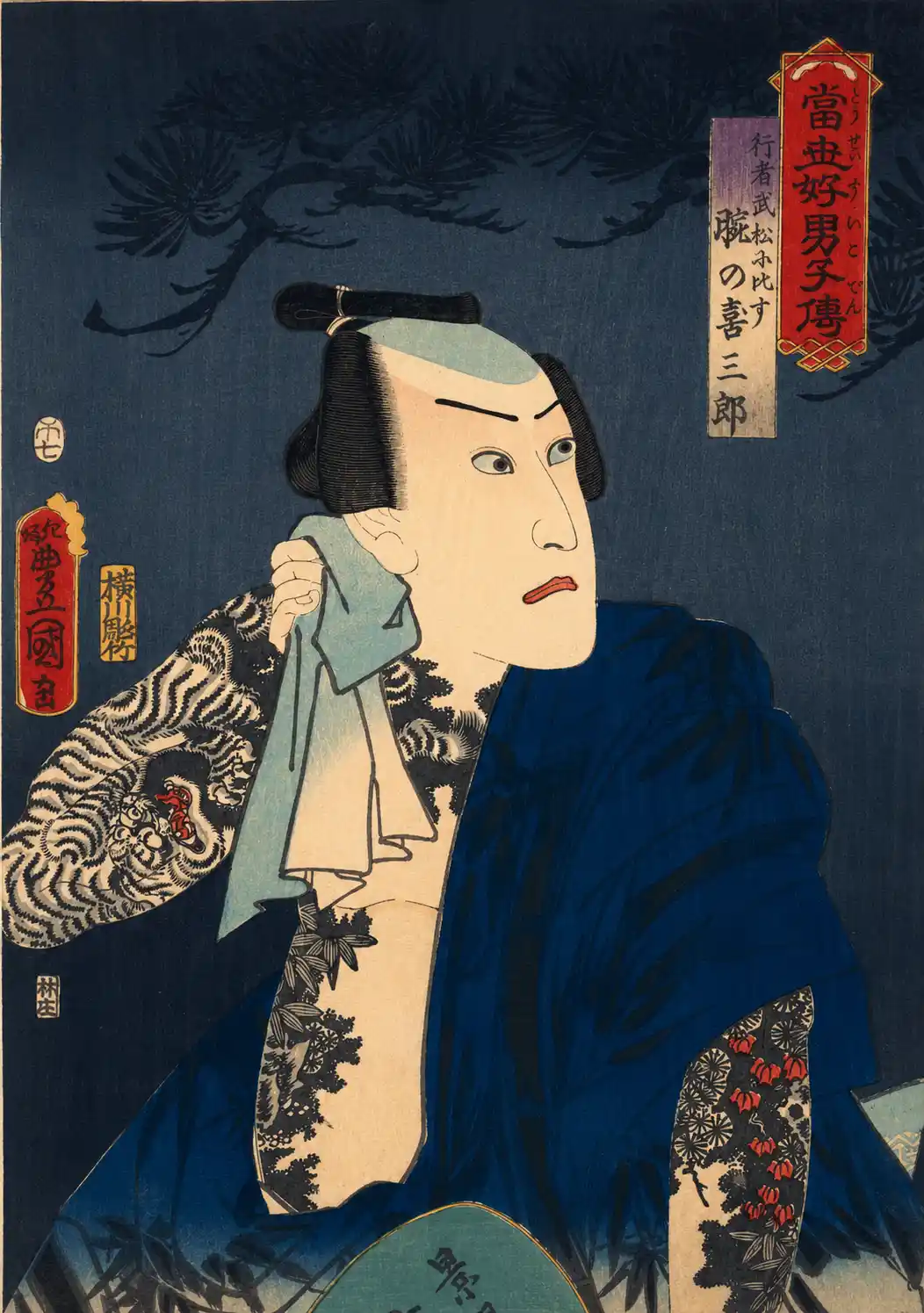
The Actor in the Night
Lantern light flickers on damp cobblestones. A blue-robed figure pauses, the air thick with the scent of pine. His face, a mask of theatre white, emerges from shadow. Not quite human. The night holds its breath as he lifts a cloth to his neck. Slow, deliberate. Listening.
The actor's eyes pierce darkness, seeing more than mere night. Tattoos curl beneath his sleeves—flowers and beasts, alive in the half-light. Edo's streets are busy with whispers—the rustle of fabric, distant laughter, a shamisen's cry. Yet here, silence reigns.
For a moment, the actor seems poised to draw a blade. The air sharpens. But the scene freezes, caught forever before the storm. Edo's heart beats in this pause, where dreams and reality blur like ink in water.
Historical Echo
In the twilight of the Edo period, actors were more than performers. They embodied the dreams of the common people. This print captures The Actor Kawarazaki Gonjūrō I in a role akin to Wu Song the Ascetic. Utagawa Kunisada's work, part of the "Pine" triptych, illustrates the fascination with exaggerated emotions and hidden desires. As the shogunate fell, these prints faded, leaving behind echoes of a world teetering on the edge of change.