

The Shadow's Edge
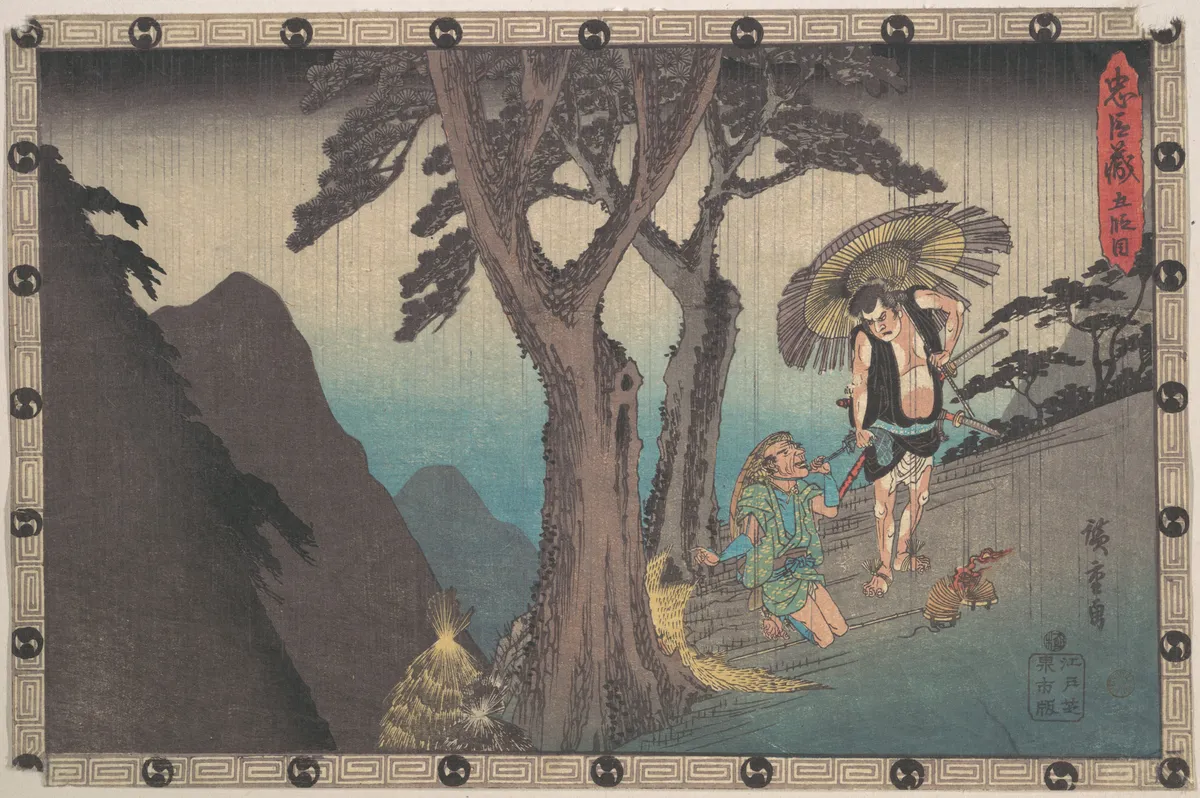
The night was thick with silence. Sadakuro's eyes glinted with malice, reflecting the moonlight. His blade, poised like a serpent ready to strike, caught a glimmer of the pale glow. Yoichibei stood, rooted, his breath shallow and ragged. The forest around them seemed to hold its breath, the leaves whispering secrets to the cold wind.
A distant owl hooted, its call echoing like a ghostly bell. Sadakuro's voice, a low growl, broke the night's stillness. "Your money or your life," he hissed, stepping forward. The ground creaked under his weight, a reminder of the world's hidden dangers.
Yoichibei clutched his satchel closer, his fingers trembling. His mind raced, the weight of his years pressing down on his frail shoulders. The darkness pressed closer, as if urging him to surrender.
The lantern's flickering light cast long shadows, dancing like spectres between the trees. Sadakuro's shadow loomed large, a dark omen against the fragile light. The tension crackled in the air, sharp as the edge of Sadakuro's sword.
Silence reigned once more, heavy and oppressive. In that moment, the world stood on the brink, teetering between fate and mercy. The night watched, an indifferent witness to the fragile dance of life and death beneath its eternal gaze.
Historical Echo
In the mid-19th century, Utagawa Hiroshige captured the volatile tension of Edo's darker moments. This print, illustrating a scene from the infamous tale of Sadakuro and Yoichibei, echoes the period's fascination with moral conflicts and the shadowy allure of the night. Hiroshige's deft use of light and shadow reflects the era's complex narratives, where every choice bore the weight of consequence.