

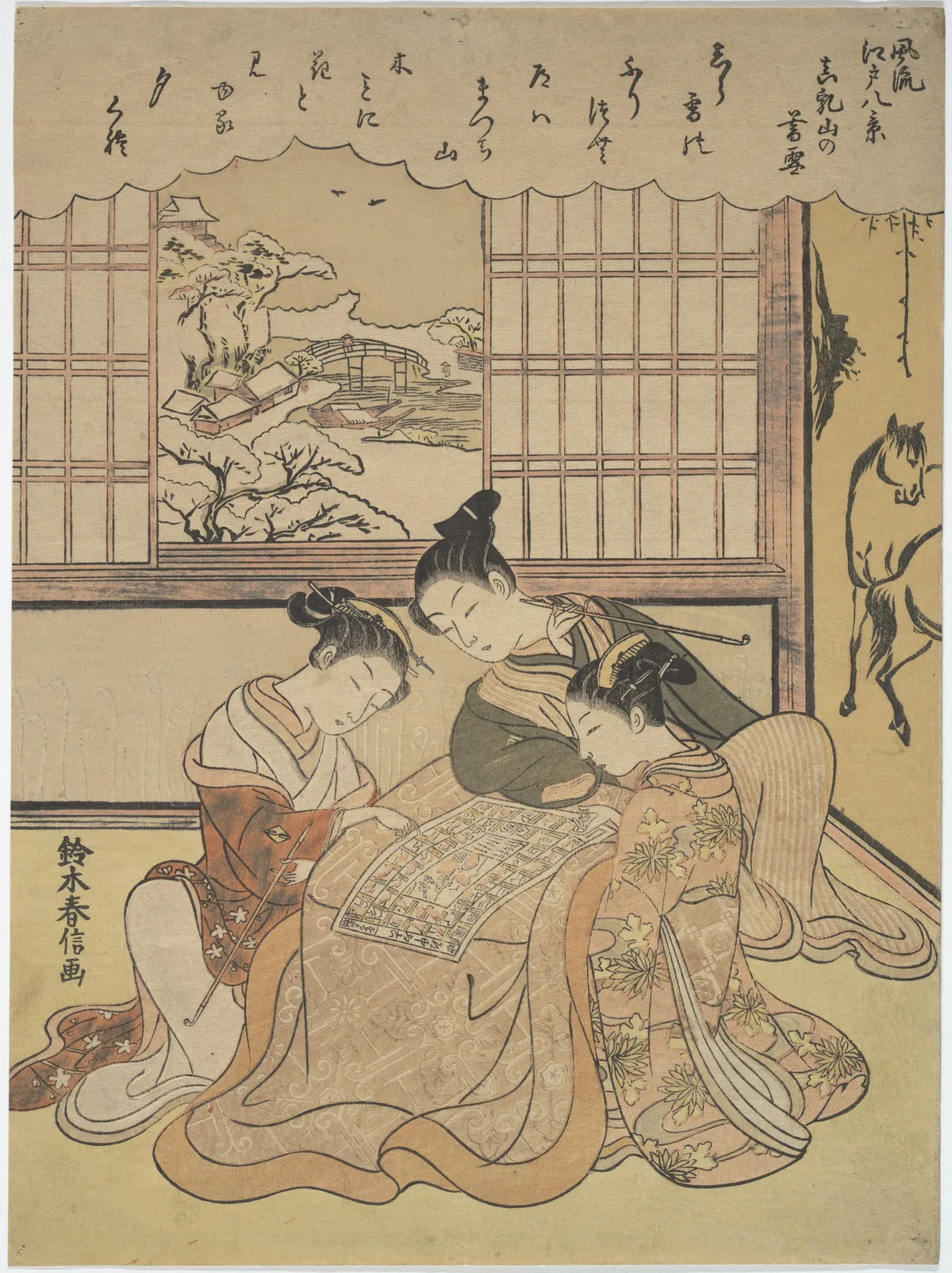
Evening Snow on Matsuchi Hill
The snow falls silently. Matsuchi Hill lies cloaked in white. A lone figure stands, the hem of her kimono brushing the snow. Her breath mingles with the chill air. She looks down, her gaze lost in the whiteness, as if seeking something buried beneath.
The evening light dims. Shadows stretch across the hill, long and thin. The snow absorbs the last warmth of day. A distant temple bell tolls, its sound heavy, burdened with memories. Footsteps crunch softly, a rhythm that breaks the stillness, only to be swallowed by silence once more.
Paper lanterns flicker in the nearby village. Their glow dances on the snow, creating a mosaic of light and shadow. The air smells of pine, cold and fresh. The weight of the world seems lighter here, beneath the snow-laden boughs.
Edo slumbers below, its rooftops dusted with snow. The river snakes through the city, dark and silent. She shivers slightly, pulling her coat tighter. The night deepens, wrapping Matsuchi Hill in its embrace. Stars begin to peek through the veil of cloud, distant and cold.
She turns away, her footsteps tracing a path back to the village. The snow falls, covering her tracks, leaving no trace of her passage. Only the quiet remains, and the endless snow.
Historical Echo
In the Edo period, the city expanded rapidly, yet places like Matsuchi Hill offered solace. Suzuki Harunobu captured these moments of stillness amidst change. His prints, delicate and detailed, froze time in a rapidly evolving world. Here, beauty lay not in grandeur but in the quiet grace of a snowy evening.