

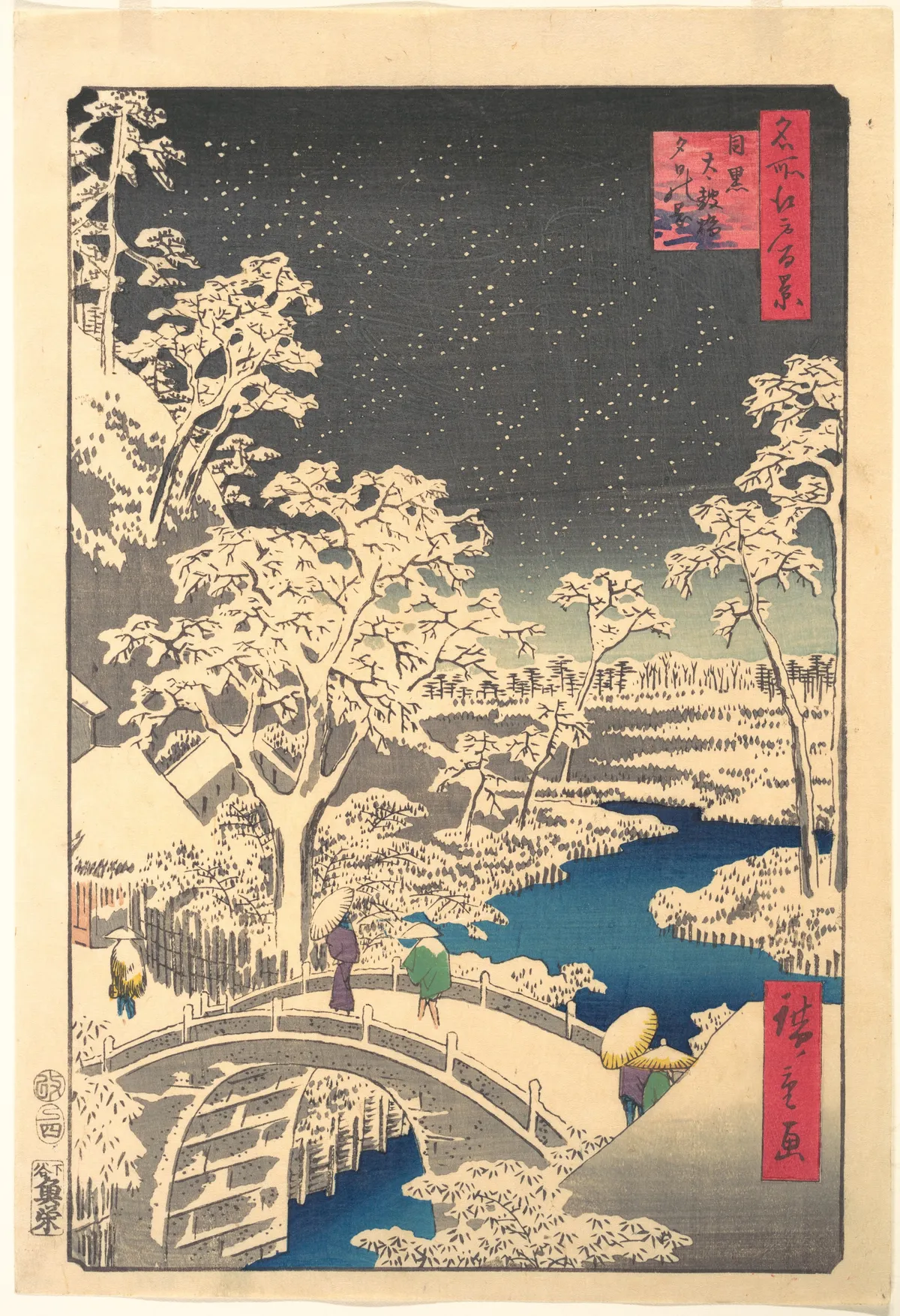
Ochanomizu
The bridge arches silently over the Kanda River. Below, the water murmurs softly, carrying with it secrets of the city. A gentle mist clings to the air, blurring the edges of the scene. On the bridge, figures in kimono move slowly, their wooden sandals echoing on the planks. They pause, gaze at the river, then continue on, swallowed by the shrouded landscape.
The town, Ochanomizu, rests quietly beyond. Its rooftops peek through the fog, a pattern of grey and brown. Lanterns flicker against the encroaching twilight, casting a warm glow on the narrow streets. The scent of damp earth and pine drifts through the air, whispering of rain.
A lone boat drifts downstream, its oars slicing through the water with a gentle rhythm. The boatman, silent, watches the world pass by, his mind as calm as the river. The city hums a subdued tune, a chorus of distant voices and the rustling of leaves.
The scene breathes with life, yet holds an eternal stillness. Time here seems to fold into itself, a moment suspended between past and present.
Historical Echo
Ochanomizu, a district in Tokyo, has long been a place of convergence. Its name, meaning "tea water," recalls a time when the river's waters were used for brewing tea for the shogunate. The bridge, a vital crossing point, connects the bustling city to its quieter outskirts. Utagawa Hiroshige, known for his evocative landscapes, captures this intersection of nature and urban life with a serene precision. His work, though rooted in a specific time, resonates with the timeless flow of the city and its river.