

Silent Passage
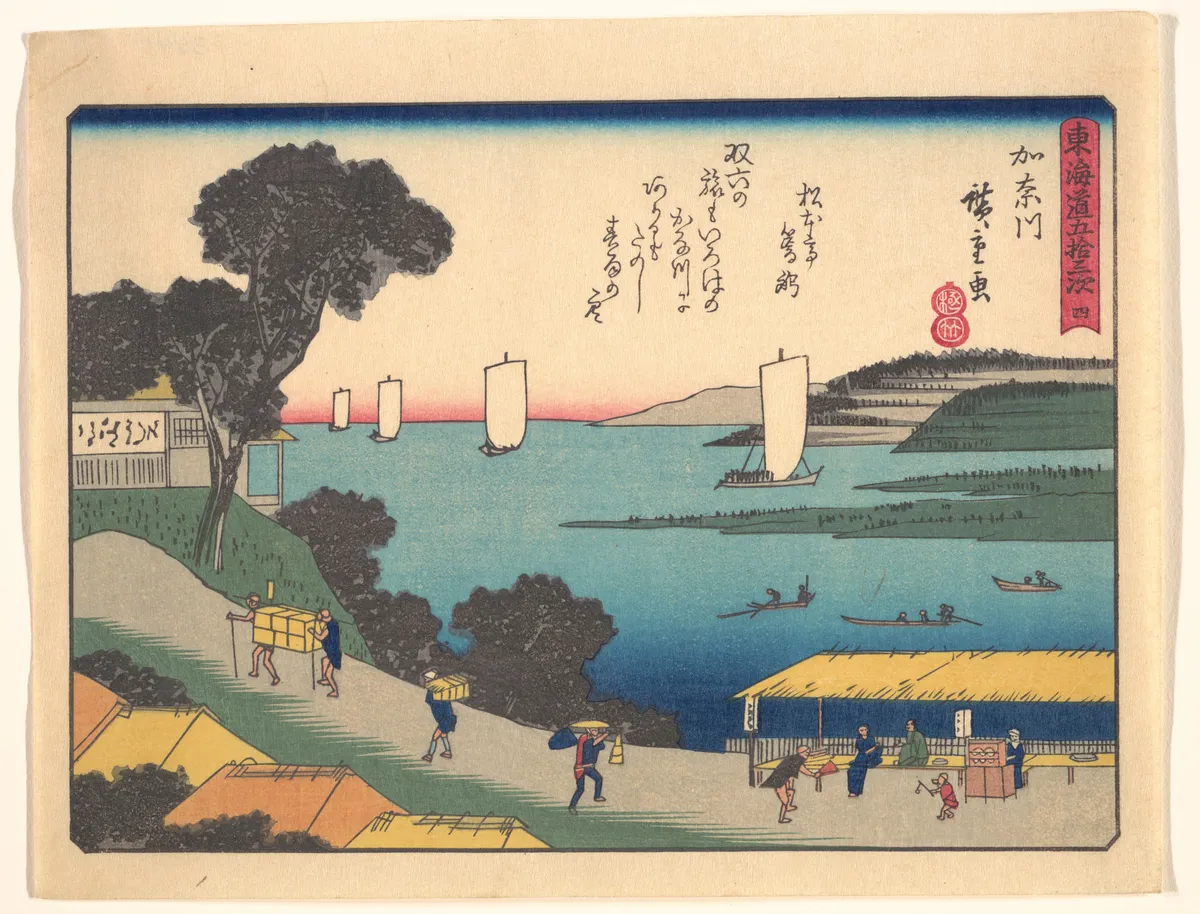
The air hangs heavy with salt. Waves brush against the rocky shore of Kanagawa. Early morning light spills across the horizon, casting long shadows. A quiet procession moves along the Tokaido Road. Their footsteps are softened by the damp earth beneath.
Clouds linger over distant mountains. A solitary pine tree bends slightly, shaped by the relentless sea breeze. Merchants and travellers, wrapped in muted kimonos, tread carefully. Each step echoes with the promise of distant destinations.
A fisherman stands by his boat, the wood creaking with each sway. He watches the procession, his eyes tracing the line of travellers disappearing into the mist. The sea whispers its ancient secrets, unheard and unheeded.
The journey continues. The road stretches on, a silent witness to countless stories. The scene fades with the soft rustle of fabric and the distant cry of a seabird, lost in the expanse of sky and water.
Historical Echo
The Tokaido Road was more than a path. It was the lifeline connecting Edo and Kyoto during the Edo period. Kanagawa, a key station along this route, saw myriad souls pass through its landscapes. Hiroshige captured this transient world, his prints immortalising fleeting moments. This particular scene, part of his famous series, speaks of the quiet persistence of travel, the solitude of the road, and the ever-present embrace of nature.