

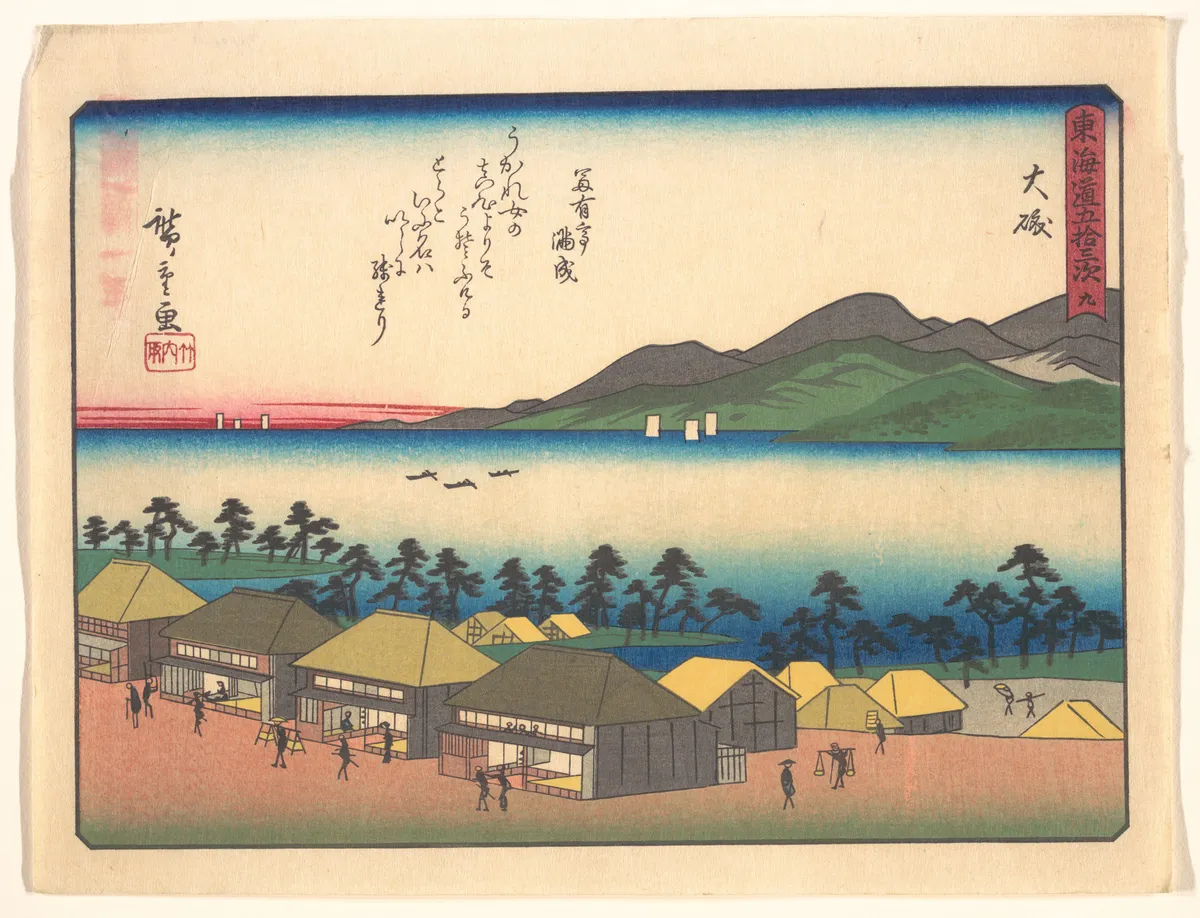
Oiso's Quiet Shore
Salt-laden air drifts over the Oiso shore. Waves, gentle yet persistent, kiss the sand. Fishermen's boats, weathered by time, rest at the edge of the sea. The sky, grey and brooding, stretches endlessly above.
A solitary traveller pauses. His feet sink slightly into the wet sand. He watches the horizon, listening to the sea's soft murmur. The road ahead, the Tokaido, winds like a whisper through the landscape.
He shoulders his pack, feeling the weight of his journey. The print in his hand, a token of Hiroshige’s vision, captures this moment. The interplay of earth, sky, and sea. A reminder of transience.
Pebbles crunch underfoot as he resumes his path. The faint echo of distant voices reaches him. The world, vast and unmoving, waits.
Historical Echo
Hiroshige’s "Tokaido Gojusan-tsugi Oiso" captures a moment along the ancient Tokaido road. This route, vital during the Edo period, connected Edo to Kyoto. Oiso, one of the fifty-three stations, offered travellers respite by the sea.
Hiroshige, renowned for his landscapes, immortalised these scenes. His prints, a blend of observation and artistry, evoke a Japan both eternal and ephemeral. This early 20th-century rendition continues his legacy, drawing the viewer into a world of quiet beauty.