

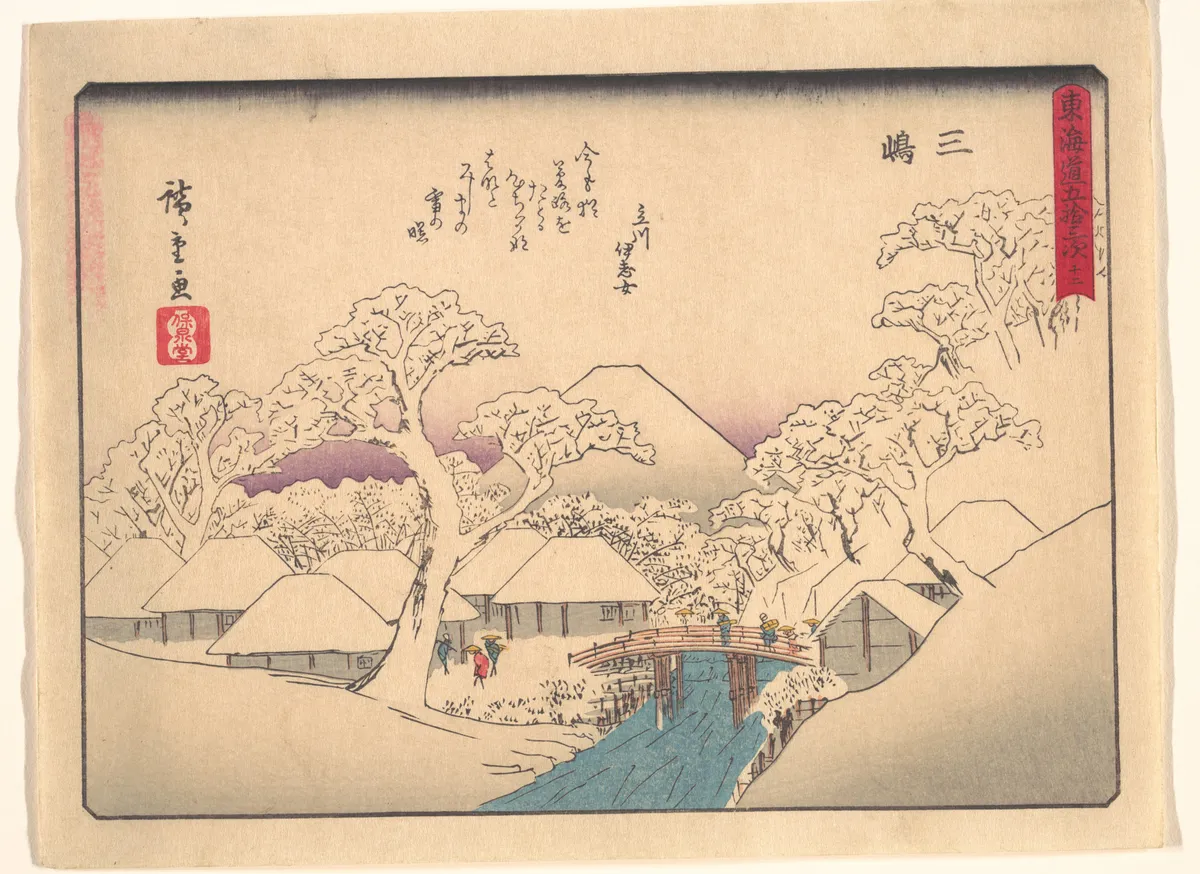
A Silent Passage through Mishima
The mist clings to the air like a shroud. A lone traveller pauses on the road, his sandals pressing softly into the damp earth. Ahead, the Mishima pass stretches, obscured by the low-lying fog. The distant silhouette of Mount Fuji looms, a ghostly presence against the pale sky. The traveller adjusts the straps of his pack, feeling the weight of his journey along the Tōkaidō.
A faint rustle of leaves echoes from the trees lining the path. The branches sway gently, their dark outlines etched against the morning light. A sense of stillness envelops the scene, broken only by the occasional call of a distant bird. The traveller breathes deeply, the cool air filling his lungs.
Each step he takes is deliberate, as if marking time itself. The wooden signpost, weathered and ancient, stands sentinel beside the road. It points the way, a silent guide for those who pass. The traveller pauses, his gaze lingering on the characters carved into the wood, before continuing on his way.
In this quiet moment, the world seems to hold its breath. The journey is long, but here, under the watchful gaze of the mountains and the whispering trees, time slows. The traveller walks on, his figure gradually swallowed by the mist, leaving only the faintest echo of footsteps behind.
Historical Echo
Mishima, a key station on the Tōkaidō, served as a vital link between Edo and Kyoto. Travellers, merchants, and samurai alike traversed this path, their stories woven into the very fabric of the road. Utagawa Hiroshige's depiction captures the ethereal beauty of this journey, where the mundane and the mystical coexist. The print, created in the early 20th century, echoes the timeless nature of travel and the enduring spirit of those who walked these ancient paths.