

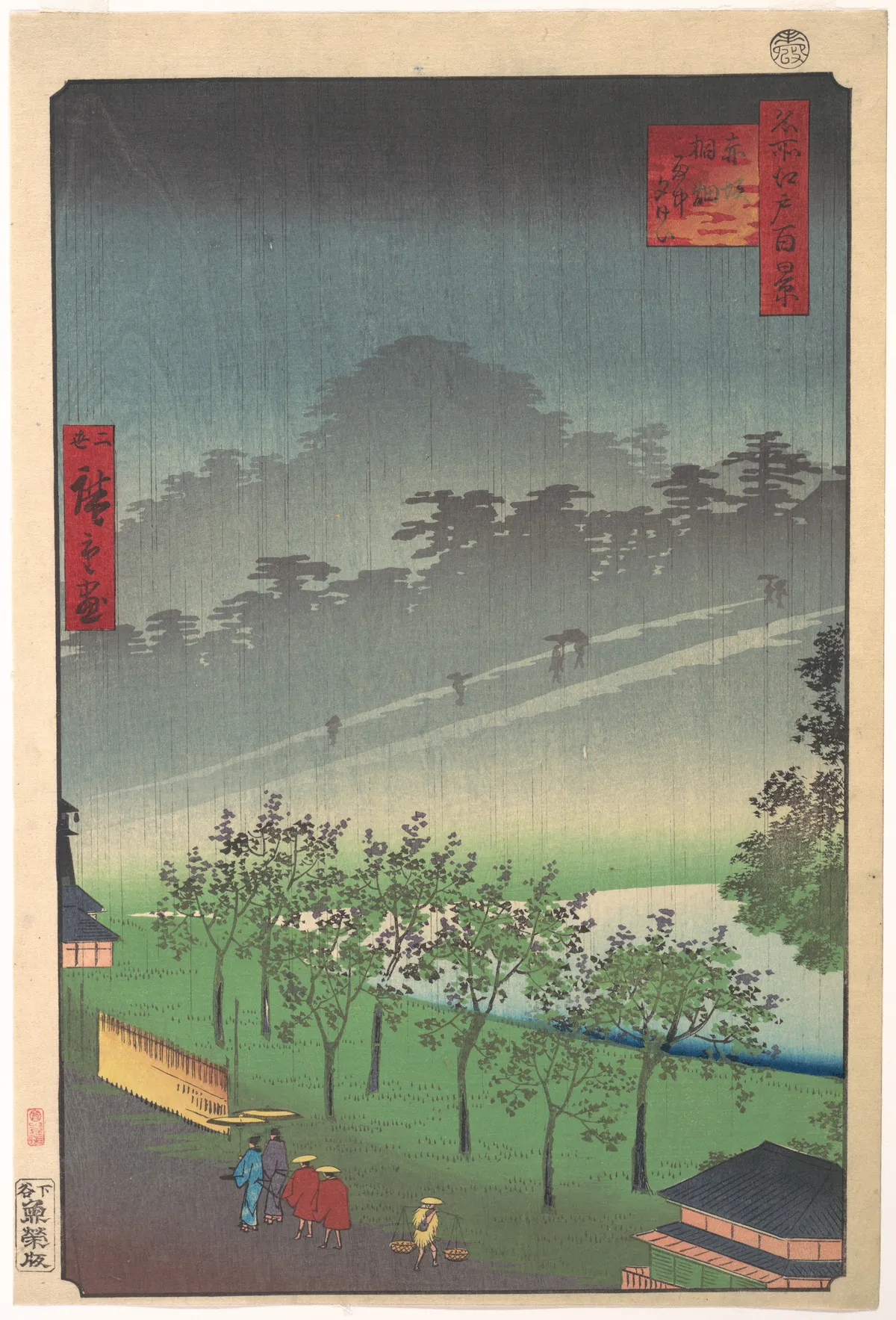
The Twilight at Akasaka
Dusk settled softly over Akasaka. The air was thick with the scent of pine and damp earth. A gentle breeze rustled the bamboo leaves, whispering secrets from the past. Shadows lengthened, stretching across the path.
A solitary figure walked slowly, his straw sandals scuffing the ground. He paused, gazing at the distant hills shrouded in mist. The horizon glowed with the fading light, hues of orange and pink merging into the deepening blue of night.
The man carried a bundle, wrapped in faded cloth. Its weight seemed to pull his shoulders down, as if he bore the burdens of countless journeys. His eyes, weary yet alert, scanned the landscape for familiar signs.
Nearby, a lantern flickered, casting a warm glow on the weathered wood of a small teahouse. The clatter of porcelain cups broke the silence, mingling with the low murmur of voices.
He moved towards the light, drawn by the promise of rest and a simple meal. The bamboo groaned as the wind picked up, carrying with it a chill that hinted at rain.
The teahouse door creaked open, and the man stepped inside. The warmth enveloped him, a brief respite from the world outside.
As night fell, the scene outside vanished into darkness, leaving only the memory of twilight at Akasaka.
Historical Echo
In the late Edo period, Akasaka was a serene passageway for travellers. Utagawa Hiroshige II captured this quiet elegance around 1859. His woodblock print evokes the gentle melancholy of a day’s end. The artist, a student of the celebrated Hiroshige, continued the tradition of landscape prints. This piece whispers of journeys and the fleeting beauty of twilight.