

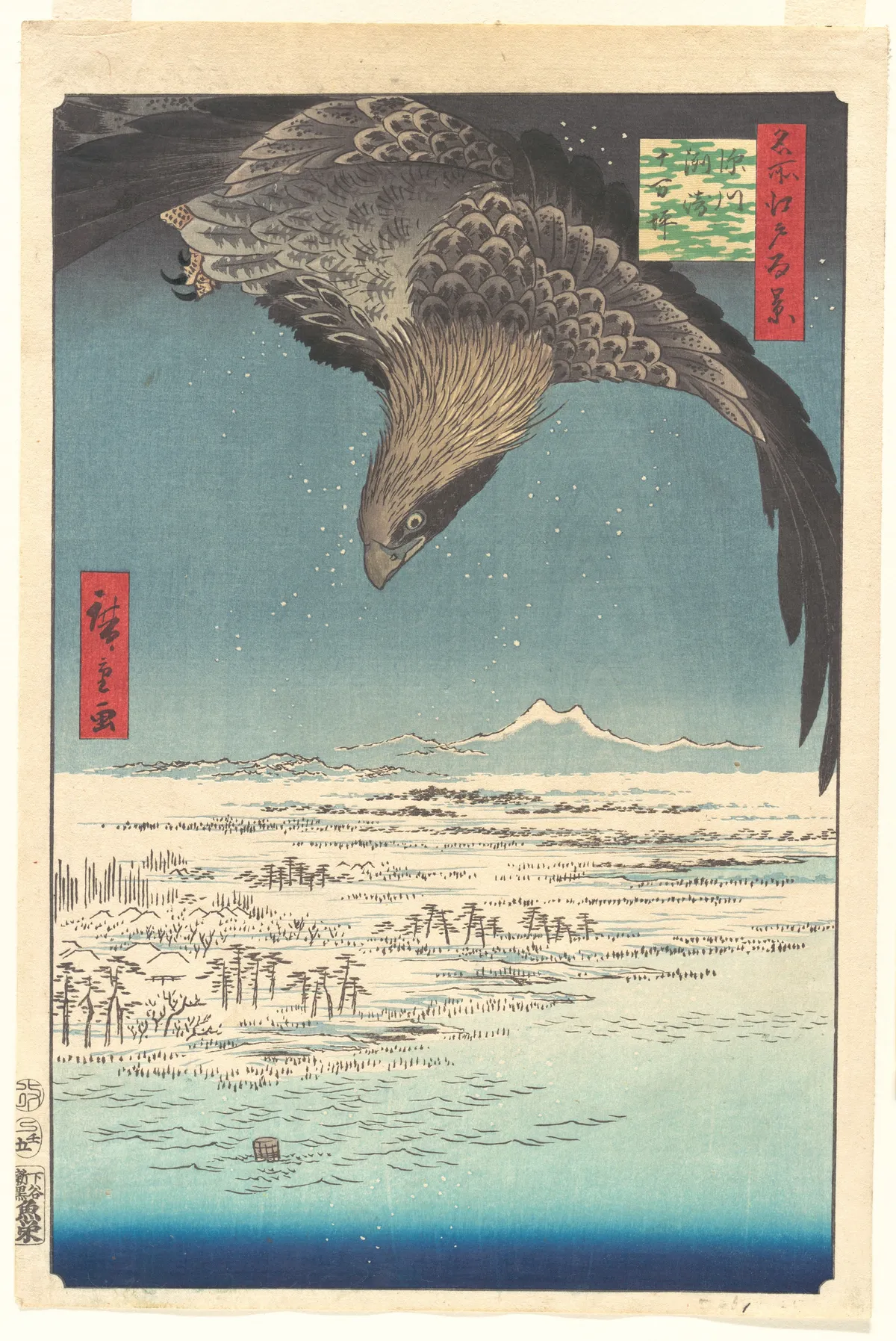
Jūmantsubo Plain at Dusk
The evening air is dense with the scent of sea salt. A vast plain stretches out, its grasses swaying gently under the weight of the coming night. The horizon is a thin line, where the earth kisses the sky with the tender touch of twilight.
A lone figure stands, silhouetted against the fading light. His straw hat is tilted, casting a shadow over his face. He watches the distant sails drift lazily across the water. The boats, mere specks now, are swallowed by the dusk.
Nearby, reeds rustle softly, whispering secrets only the wind understands. A heron takes flight, its wings cutting through the air with deliberate grace. It vanishes into the dimming sky, leaving behind a silence that hums with the promise of night.
The world holds its breath, suspended in this moment between light and dark. The plain, the figure, the sea—all are bound by the quiet rhythm of the evening.
Historical Echo
In 1856, Edo was a city of contrasts, where the bustle of urban life met the tranquility of its outskirts. Utagawa Hiroshige captured this delicate balance in his series, "One Hundred Famous Views of Edo." The Jūmantsubo Plain at Fukagawa Susaki offers a glimpse into the serenity that lay just beyond the city’s edge. This landscape, with its vast expanse and gentle horizon, invites contemplation and a sense of peace. Hiroshige’s work remains a testament to the enduring beauty of these spaces, echoing through time.