

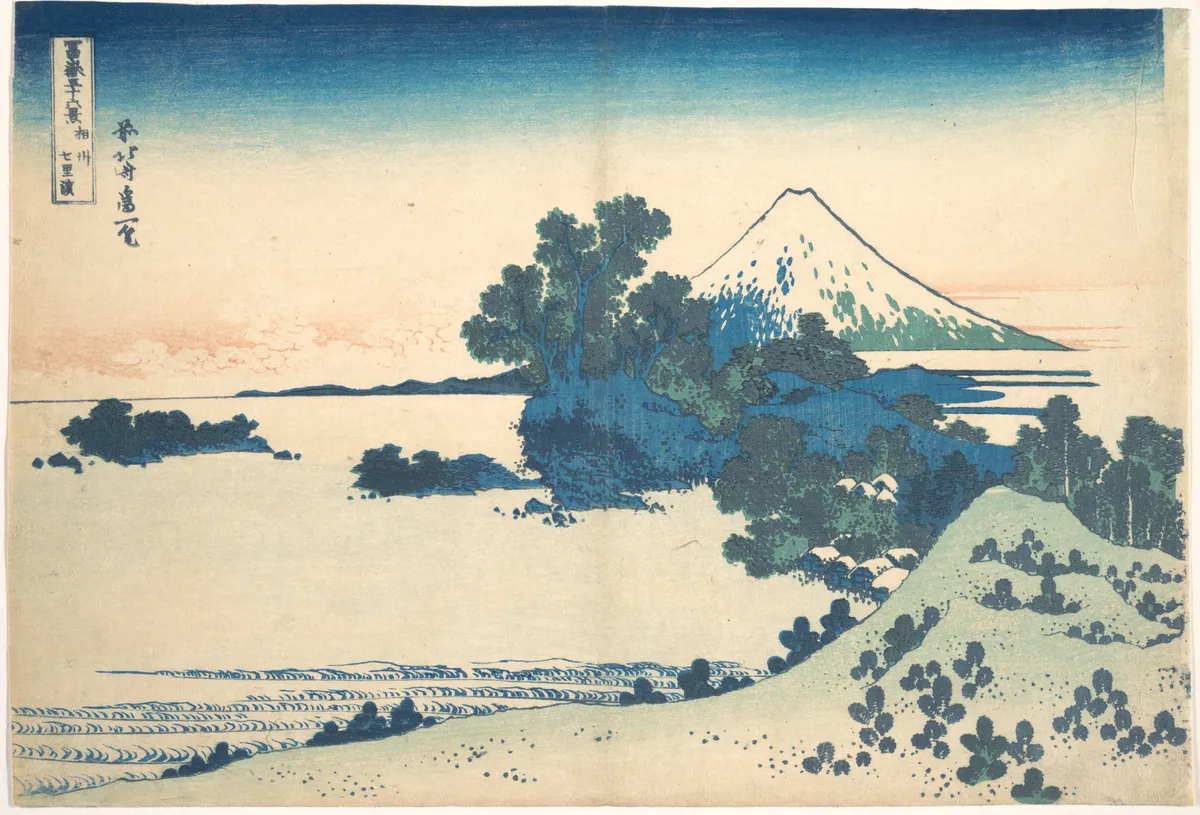
Shichirigahama's Silent Reverie
A gentle hush lay over Shichirigahama. The sea lapped softly at the shore, whispering secrets only the sand could understand. In the distance, Mount Fuji stood silent, its peak brushing against the sky with ethereal grace. The air was crisp, carrying the faint scent of salt and pine. A solitary boat drifted, its sails catching the muted light of dawn. Fishermen moved with practiced ease, their silhouettes stark against the soft glow of the horizon. Every movement was deliberate, each footstep a quiet echo on the wooden deck. Time seemed suspended, caught between the ebb and flow of the tide.
The scene was timeless, an eternal moment painted by nature itself. Fuji watched over all, a guardian of dreams and whispered prayers. The world felt vast and intimate under its gaze. Shadows played across the landscape, dancing with the first rays of sun. The colors of the morning were subdued yet profound, a palette of blues and greys tinged with the promise of day. Silence filled the spaces between waves, a companion to the gentle rhythm of life by the sea. This was Shichirigahama's gift—an invitation to pause, to breathe, and to simply be.
Historical Echo
Katsushika Hokusai captured this serene moment in his series Thirty-six Views of Mount Fuji. Created around 1830–32, the prints reflect a deep reverence for nature's beauty and power. Hokusai's work transcended mere representation, inviting the viewer into a tranquil world where the mountain's majesty reigns supreme. Shichirigahama, with its gentle coastline and distant Fuji, remains a testament to Hokusai's mastery in depicting the soul of Japan's landscape.