

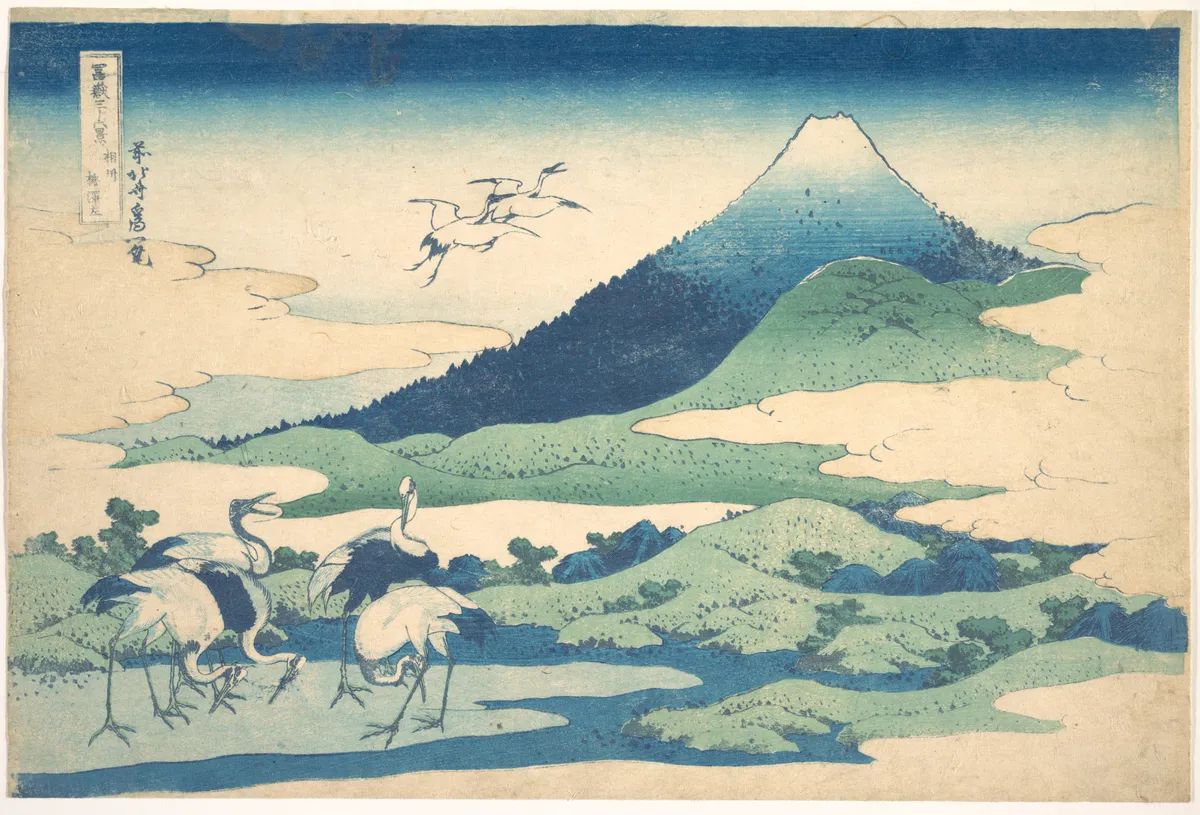
Umezawa Manor in Sagami Province
Mist clings to the air, thick and cool. The manor stands silent, nestled among trees. The ground, damp and soft, whispers underfoot. In the distance, Mount Fuji rises, serene and indifferent. Water flows nearby, a gentle murmur that fills the space between breaths. All else is quiet. The manor, with its thatched roof, seems to hold its breath. A lone bird calls, its voice lost in the vastness. Shadows stretch long across the earth. The sky, a muted blue, watches over all. Here, time slows. The world waits. Dust settles gently on old wood, and the wind carries the scent of pine. Hokusai's vision captures the stillness, the weight of the air, the patience of the mountains. Each element, perfectly placed, tells of a moment suspended in eternity.
Historical Echo
In the early 1830s, Hokusai embarked on his series, "Thirty-six Views of Mount Fuji." This print, "Umezawa Manor in Sagami Province," reveals his mastery of landscape. It reflects a time when nature and humanity coexisted in quiet harmony. The manor, a symbol of human presence, stands small against the grandeur of Fuji. Through Hokusai's eyes, we glimpse the Edo period's reverence for both the transient and the eternal. The print whispers of a world where every breath is in tune with the rhythms of land and sky.