

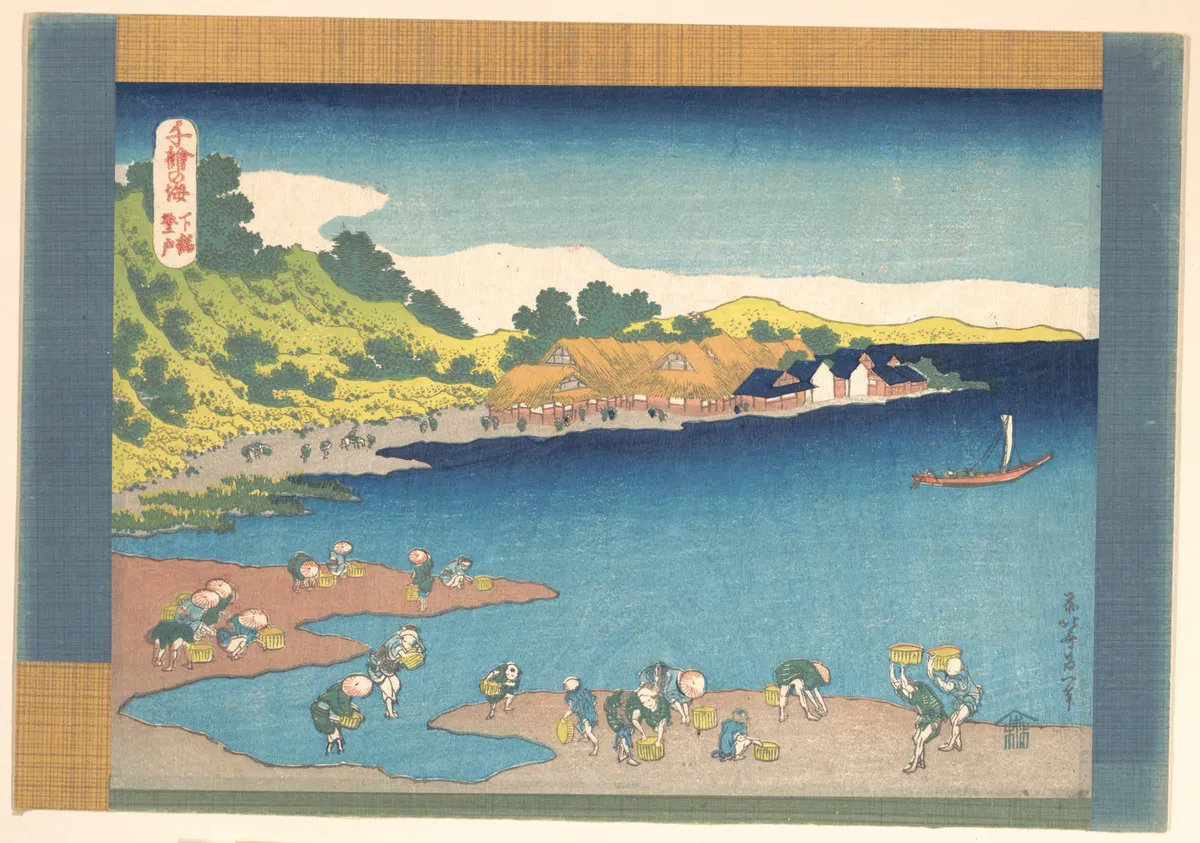
Noboto at Shimōsa
The sea lay still under a sky heavy with clouds. Soft whispers of wind brushed against the water's surface, creating gentle ripples. A lone boat glided quietly, its mast a dark silhouette against the muted horizon. The fishermen aboard moved with a practiced silence, their eyes scanning the water for signs of life beneath. The air was thick with salt, the scent mingling with the dampness of the approaching rain.
In the distance, the outline of Shimōsa loomed—a dark shape against the sky. The sea stretched out endlessly, a vast mirror reflecting the brooding clouds above. The rhythm of the oars cut through the silence, a steady heartbeat in the tranquil expanse.
Hokusai captured this moment with precision, each line of the woodblock etching the weight of the atmosphere. The print held the quiet power of the sea, its presence both comforting and infinite. As the boat drifted, the world seemed to pause, suspended in the delicate balance of nature's breath.
Historical Echo
Katsushika Hokusai, a master of ukiyo-e, created this scene in 1832–33. Part of his series "One Thousand Pictures of the Sea," it reflects his fascination with water's ever-changing nature. Shimōsa, a province known for its coastlines, provided a serene backdrop. Hokusai's work captures the essence of Edo Japan's relationship with the sea—both a source of sustenance and a path to the unknown. His prints remain a testament to the era's art, echoing the quiet strength of Japan's natural beauty.