

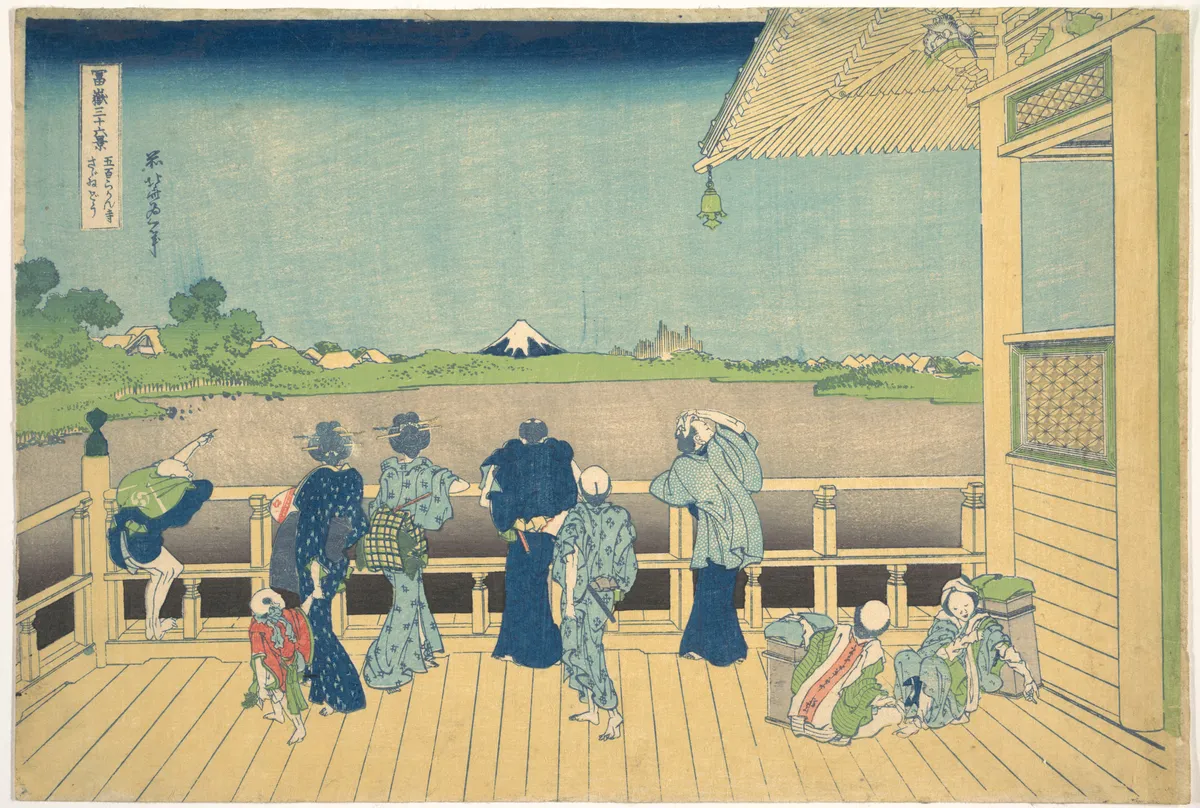
The Quiet View
The wooden steps creak under gentle footsteps. Late afternoon light filters through the trees, casting soft shadows on the path. Sazai Hall stands quiet, its curved roof a silhouette against the sky. A light breeze stirs the air, carrying the scent of pine and distant incense from the temple.
Below, the city hums, but here, peace reigns. Mount Fuji looms in the distance, its presence silent but profound. A monk pauses, gazing toward the peak, hands folded within sleeves. His breath rises in the cool air, a fleeting cloud.
Visitors whisper, their voices hushed by the sacred ground. They weave among the statues, the Five Hundred Arhats, each face unique, each pair of eyes unblinking. The hall's wooden planks warm beneath the sun, the gentle touch of time etched into their grain.
A child giggles, chasing shadows. Her laughter ripples through the stillness, a brief echo of life amidst the serenity. The monk smiles, a rare break in his composed demeanour. He watches the child, then returns his gaze to the mountain.
The scene holds—a moment suspended between the earthly and the divine, captured forever in the mind's eye.
Historical Echo
Katsushika Hokusai’s "Thirty-six Views of Mount Fuji" series immortalises the sacred mountain. Sazai Hall, part of the Temple of the Five Hundred Arhats, offers a spiritual refuge. Built during the Edo period, it mirrors the era's harmony between nature and human craftsmanship. Hokusai’s work transcends the visual, inviting viewers to step into the tranquil, yet vibrant world he sees.