

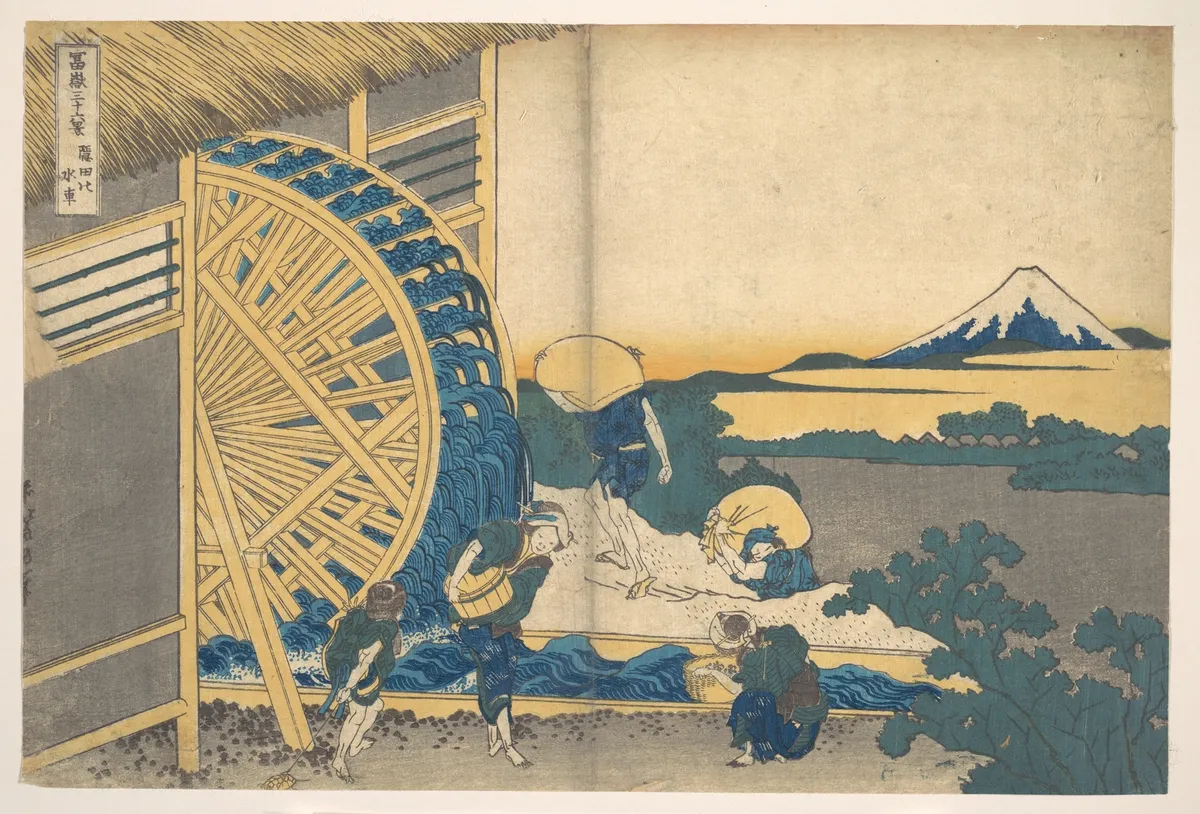
The Waterwheel at Onden
A soft mist clings to the water's edge. The wooden creak of the waterwheel echoes through the early morning air. It turns slowly, catching the faint light of dawn. Each rotation sends ripples across the pond. A cool breeze stirs the leaves. They rustle gently, whispering secrets to the passing clouds.
Mount Fuji rises in the distance, a silent guardian. Its peak is dusted with snow, pristine against the pale sky. The air carries the scent of damp earth and fresh water. A lone farmer stands by the wheel, his silhouette dark against the morning light. His hands are weathered, moving with the rhythm of the wheel. He pauses, watching the steam rise from his breath, then returns to his work.
In the village, the day begins slowly. The waterwheel continues its endless dance, a heartbeat in the quiet landscape. Time flows like the water, steady and unhurried, under the watchful gaze of Fuji.
Historical Echo
In the Edo period, waterwheels like this one at Onden were vital to rural life. They powered mills and aided in irrigation, essential for agriculture. Hokusai's print captures this quiet industry against the awe-inspiring presence of Mount Fuji. His series, "Thirty-six Views of Mount Fuji," reflects a deep admiration for the mountain, intertwining everyday scenes with its majestic silhouette. Each print is a meditation on the harmony between man and nature, the eternal and the ephemeral.