

The Silent Verse
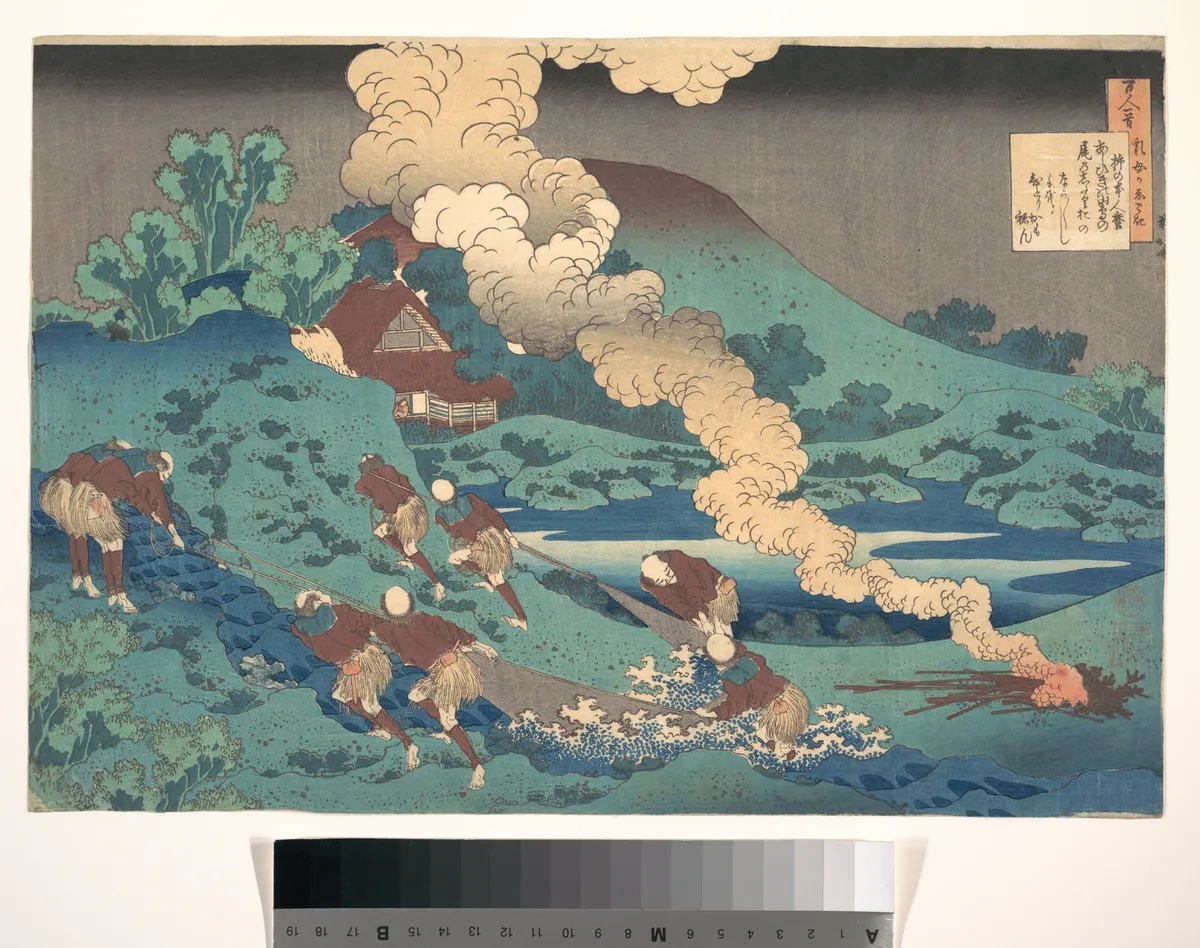
A lantern flickers in the gentle breeze. Shadows dance across the wooden floor. Hokusai sits, ink brush poised, capturing a world within a single frame. The poem by Kakinomoto Hitomaro whispers from the paper, its syllables lost to the ages.
A figure stands among trees. Pine needles carpet the ground. The air is heavy with the scent of damp earth. The man's gaze is distant, lost in thought. His robes, layered and weighty, rustle with each soft movement.
The sky above is a muted grey, promising rain. Leaves tremble in anticipation. Silence reigns, broken only by the rustle of fabric and the distant call of a bird.
The man's lips move silently, reciting lines known only to him. The poem, a bridge to the past, binds him to the present. He is both here and elsewhere, a ghost among the living.
Hokusai watches, capturing this moment of solitude. The paper drinks the ink, preserving the silence, the weight of words unspoken.
Historical Echo
Kakinomoto Hitomaro, a revered poet, lived in the late Asuka period. His verses spoke of nature, love, and the human condition. This print, from Hokusai's series, invites contemplation of the eternal, the quiet moments that connect us across time.
Katsushika Hokusai, a master of ukiyo-e, brings these moments to life. His series, "One Hundred Poems Explained by the Nurse," merges poetry and art, offering a window into the soul of Japan's literary heritage.