

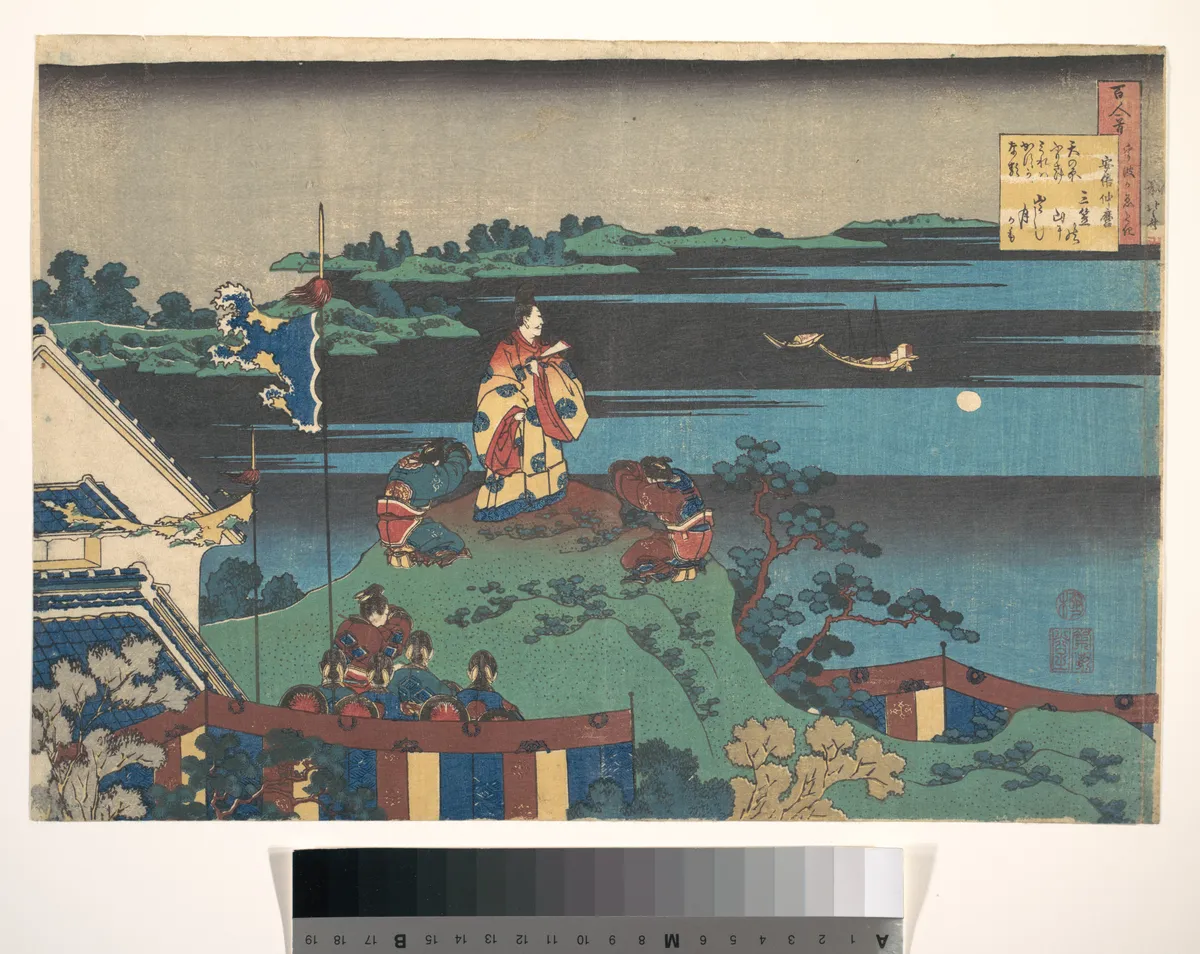
Beneath the Moonlit Sky
The night air is thick with silence. A solitary figure stands under the vast, sprawling sky. Abe no Nakamaro gazes upwards, his eyes tracing the moon's luminous arc. The cool breeze carries the scent of pine. His robes rustle softly with each shift of his weight. He is far from home, yet the moon remains a constant companion. The moonlight spills over the landscape, bathing it in a gentle glow. It whispers of distant lands, of journeys untaken, of poems yet to be written.
In the distance, crickets begin their nightly chorus. Nakamaro listens, the sound filling the empty spaces around him. His heart swells with a longing that stretches beyond the horizon. He recalls the verses he composed, each word a tether to the life he once knew. The paper feels rough against his fingers, the brush strokes firm and deliberate. Words flow like a river, steady and unyielding.
The stars flicker in and out of view, hiding behind wisps of cloud. Nakamaro's breath is slow, measured. He closes his eyes, letting the night wash over him. The poem is his anchor, a bridge between the worlds. Its rhythm pulses in time with his heartbeat.
Somewhere, a lantern flickers, casting shadows that dance and sway. Nakamaro turns, the moment passing like a whisper. Yet the poem remains, etched in moonlight and memory.
Historical Echo
Abe no Nakamaro was a Japanese scholar and poet of the Nara period. Sent to China as part of a diplomatic mission, he remained there for many years. His longing for his homeland found expression in poetry, most famously in the Hundred Poems. This ukiyo-e by Katsushika Hokusai captures the essence of Nakamaro's yearning under the moonlit sky, connecting the distant past with the timeless beauty of the night.