

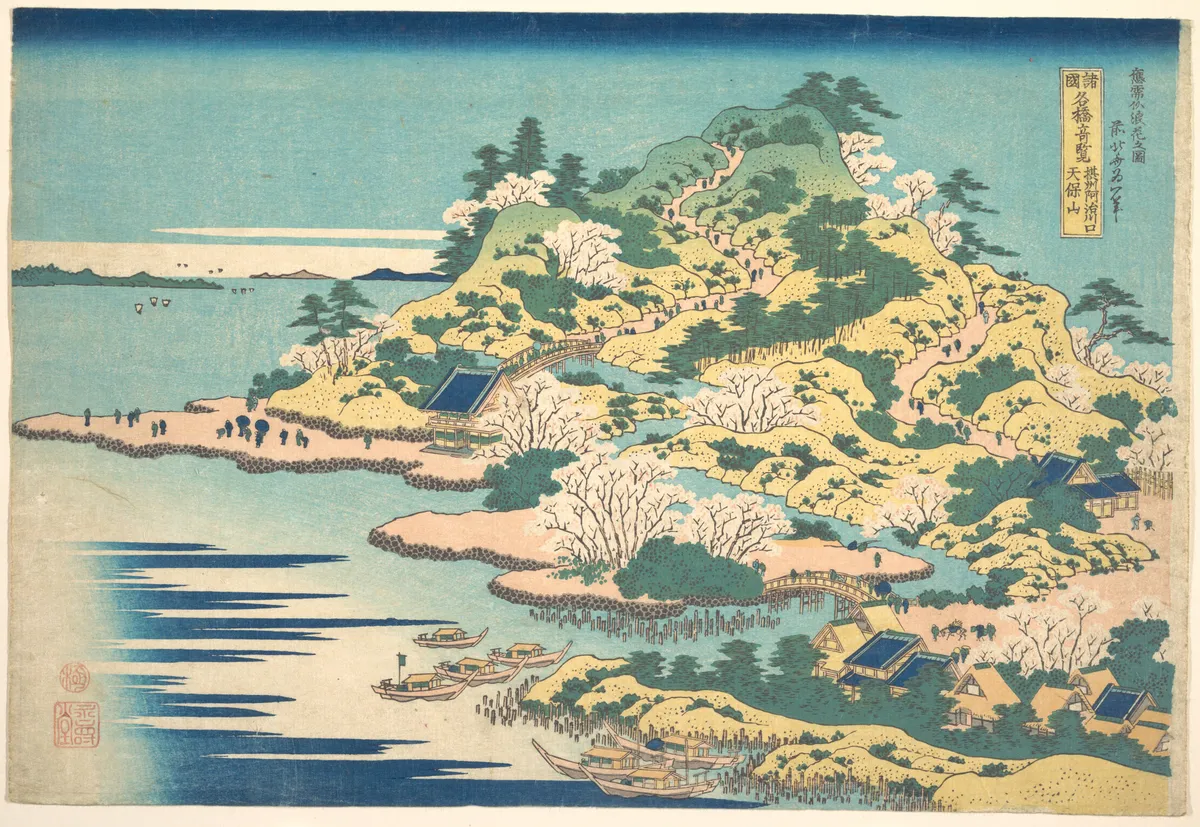
Tenpōzan’s Quiet Majesty
The Aji River whispers past wooden boats. Nets hang like ghostly shrouds. Fishermen, backlit by the pale dawn, move with deliberate grace. Tenpōzan rises, a gentle mound, cloaked in mist. The air is heavy with salt and the promise of rain. A woman, her kimono a splash of colour, pauses on the bridge. She watches the river’s slow dance. Her thoughts are as clouded as the distant hills. The world is muted, save for the soft lapping of water against stone. A heron stands motionless, a sentinel of the riverbank. Time drifts like the current, unhurried and eternal.
Historical Echo
Hokusai captures a moment suspended between earth and sky. The Tenpōzan hill, though modest, was a symbol of progress. Constructed from the earth dredged to deepen Osaka’s harbours, it was both a landmark and a promise. Bridges, vital arteries of the Edo period, connected lives and commerce. This print, part of a series on bridges, speaks of their silent strength. The scene is not merely a view but a whisper of life’s delicate balance, a reminder of nature’s quiet power amidst human endeavour.