

Silent Reverence
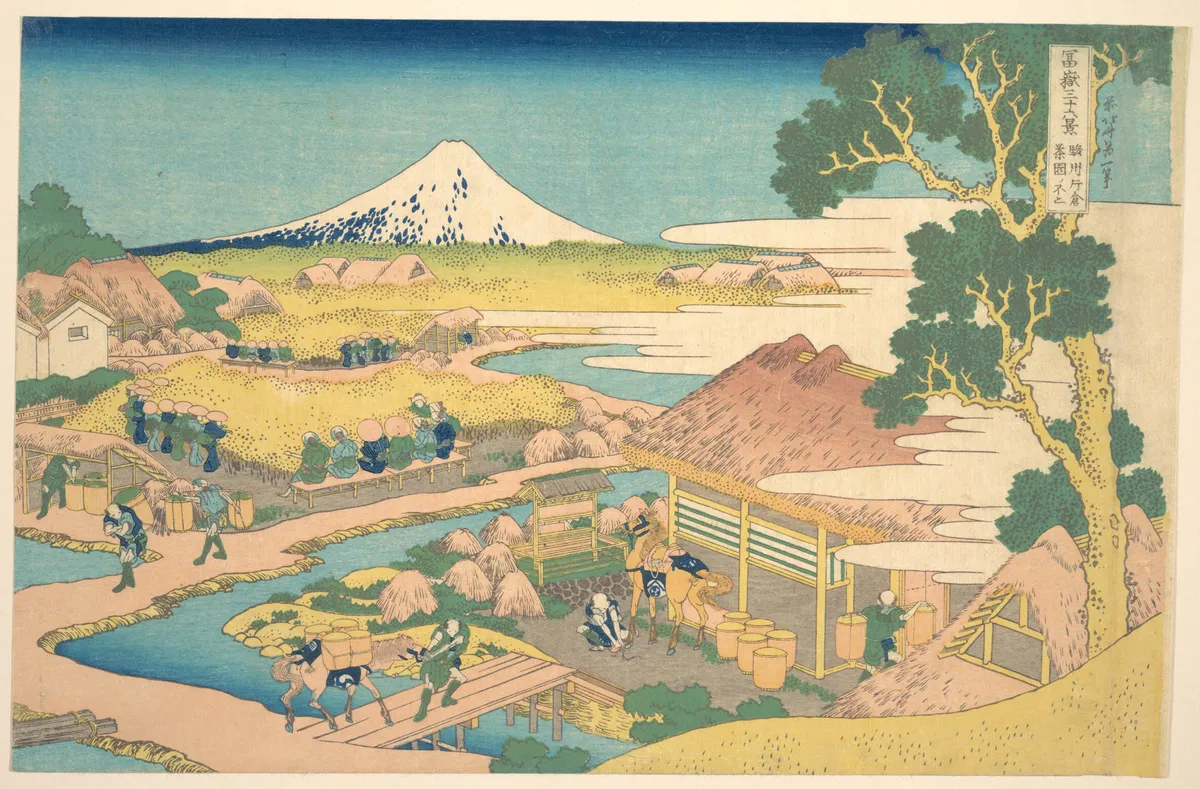
The morning mist clings to the Katakura tea fields. Mount Fuji stands distant, silent under a pale sky. The air is heavy with the scent of damp earth and budding leaves. Workers move slowly, their movements deliberate, hands brushing against the vivid green of tea bushes. Each leaf is plucked with care, fingers stained by the soft dew.
The mountain watches over them, its peak dusted with snow, a pale ghost against the azure. Shadows shift as the sun rises, casting long silhouettes across the undulating fields.
A gentle breeze stirs, whispering through the rows, a quiet song of the land. The world is still, every sound absorbed by the vastness of the earth and sky. A lone crow caws from a distant tree, its voice a sharp contrast against the muted sounds of labour.
Here, in Hokusai’s vision, time is suspended. The tea fields stretch endlessly, a sea of green under the watchful gaze of Fuji. The workers, bound to their task, are part of this living landscape. In this moment, nothing exists beyond the rhythm of their work and the silent majesty of the mountain.
Historical Echo
During the Edo period, tea cultivation thrived in Suruga Province. Hokusai captured this serene industry, blending it with the timeless presence of Mount Fuji. These scenes were part of his famous series, "Thirty-six Views of Mount Fuji". Each print, a meditation on nature and human endeavour, whispers of a world where the sacred mountain watched over all.