

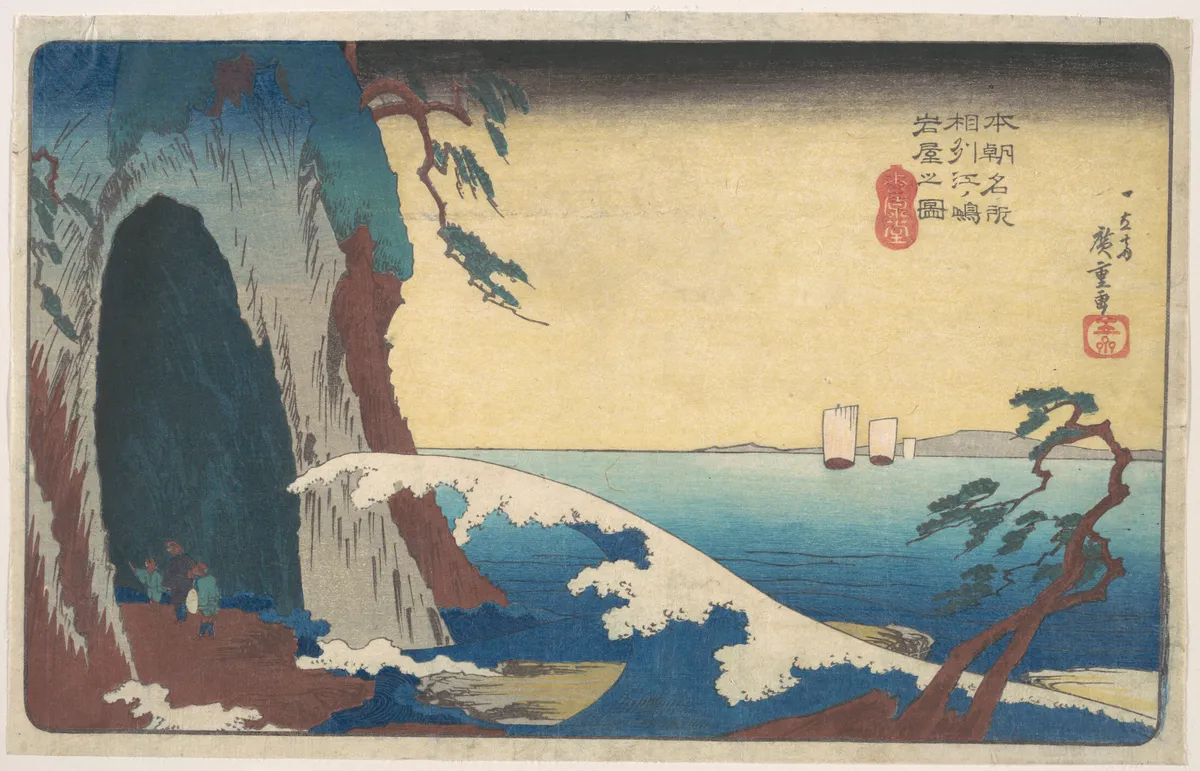
Enoshima's Whisper
Footsteps crunched softly on the pebbled path. A salt-tinged breeze drifted from the sea. Hiroshige's eyes traced the ragged coastline of Enoshima, where land met water with a solemn embrace. Between jagged rocks, the yawning mouth of Iwaya Cave beckoned, its secrets hidden in shadow.
The air was heavy with the scent of brine and damp stone. Waves murmured, a rhythmic chant echoing the island's ancient tales. Gulls wheeled overhead, their cries punctuating the air, sharp and distant. Hiroshige paused, brush in hand, capturing the interplay of light and shadow on paper.
Inside the cave, silence reigned, thick and palpable. The world outside was a distant hum, muffled by stone and time. Hiroshige stepped inside, his footsteps echoing against the cavern walls. The cool air clung to his skin.
In the dim light, he saw the sea's eternal dance, waves surging and retreating, a heartbeat against the earth. He felt the island's pulse, its quiet resilience. Each stroke of his brush was a memory, a whisper of Enoshima's soul.
Historical Echo
Enoshima, a small island off Japan's coast, has long been shrouded in legend. Known for its sacred caves and breathtaking views, it drew pilgrims and artists alike. Utagawa Hiroshige, a master of ukiyo-e, often captured its essence, translating nature's fleeting moments into timeless art. His prints remain a window to a world where nature and humanity exist in delicate harmony.