

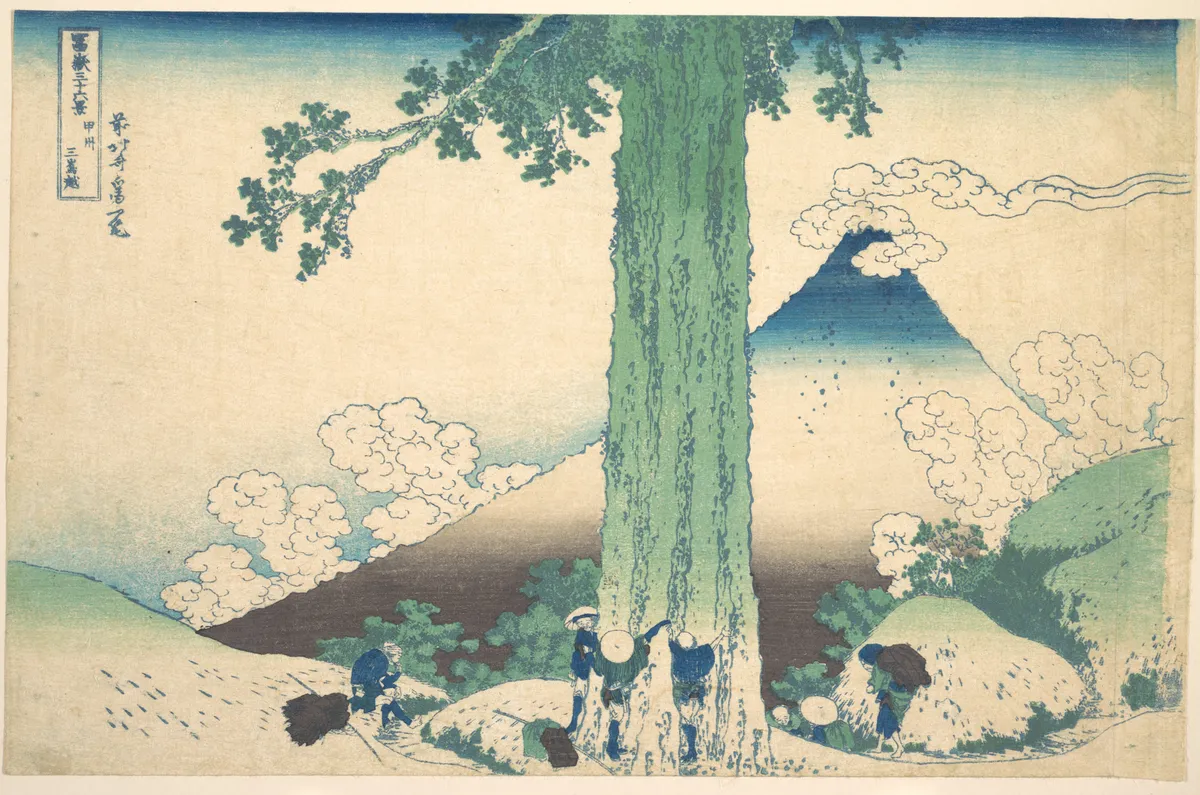
Mishima Pass in Kai Province
The air was crisp and thin at Mishima Pass. Pines stood tall against the sky. Their needles whispered secrets to the wind. Below, the earth sloped gently, a path winding its way through the province. A distant view of Mount Fuji crowned the horizon, majestic and eternal, its peak brushed with snow.
Travellers moved slowly, burdened by their packs. Their footsteps crunched on the gravel path. An old man paused, leaning on his wooden staff. He looked up at Fuji, eyes tracing its silent grandeur. Beside him, a child tugged at his sleeve, impatient to continue.
The sun dipped lower, casting long shadows. Light played upon the pass, flickering through branches. A hawk circled above, its cry piercing the stillness. The scene held a quiet melancholy, a moment frozen in time.
Historical Echo
In the early 1830s, Katsushika Hokusai captured the essence of Japan's landscapes. His series, "Thirty-six Views of Mount Fuji," celebrated the mountain's presence. Mishima Pass, a place of transit and reflection, offered a perfect vantage. Here, nature and human endeavour met under the watchful gaze of Fuji. The print, a blend of artistry and observation, remains a testament to Hokusai's vision.