

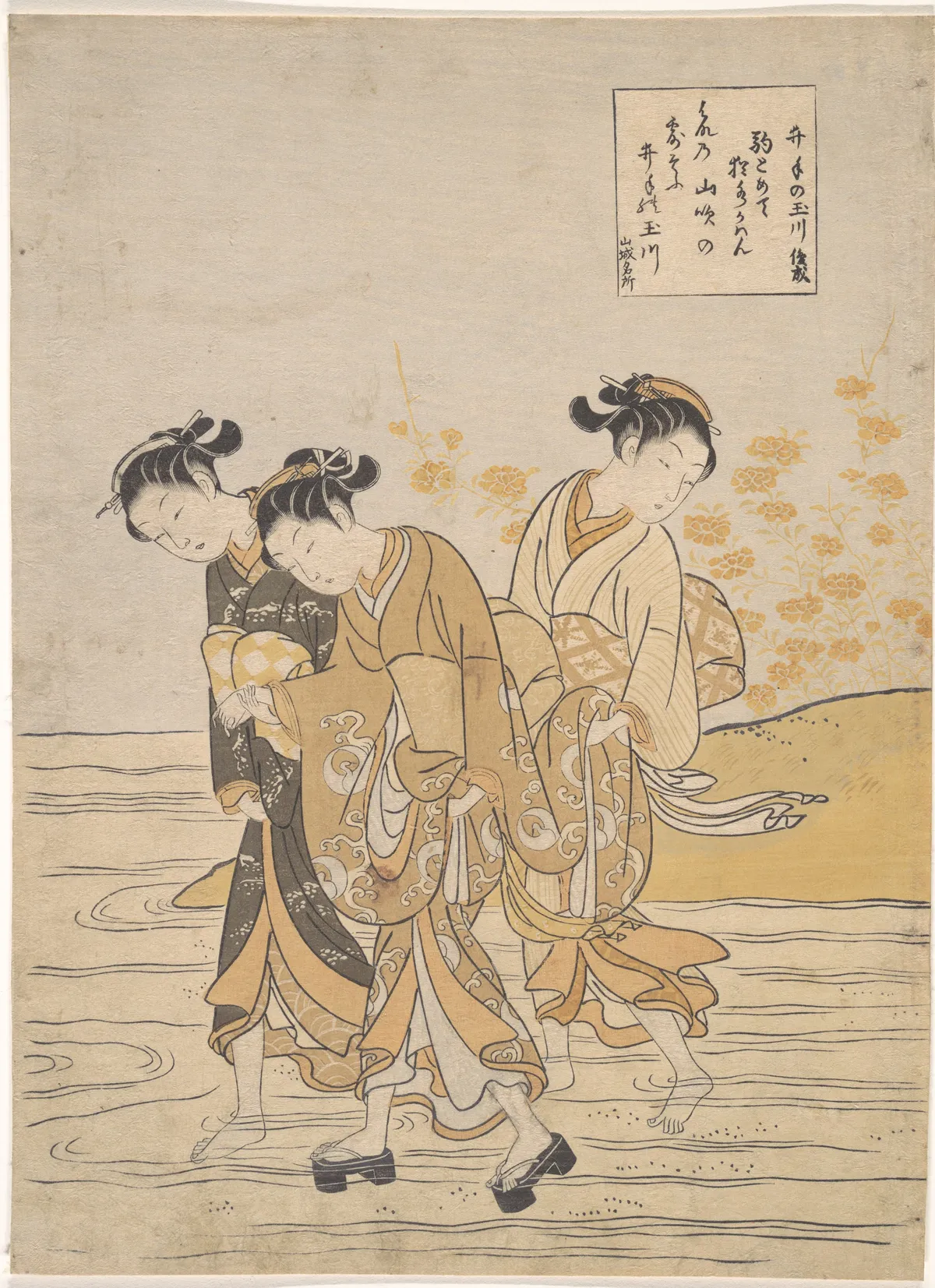
Jewel River at Ide
The air is cool and damp by the river's edge. Light filters softly through the overhead canopy, casting gentle shadows on the water's surface. A woman kneels by the Jewel River, her kimono sleeves trailing in the grass. She leans forward, her reflection rippling in the current.
Her movements are slow, deliberate. She reaches into the water, her fingers brushing against smooth stones. The river murmurs softly, a constant whisper beneath the sky. Her gaze is thoughtful, as if she seeks something hidden among the stones.
A light breeze stirs the leaves, carrying the faint scent of pine. The woman pauses, her hand still in the water. Silence stretches, broken only by the river's gentle song.
A distant temple bell tolls, its sound deep and resonant. She stands, water droplets glistening in the sunlight as they fall from her hand. Her eyes linger on the river, on the way it snakes through the landscape, a ribbon of liquid silver.
The moment passes. She turns away, her footsteps soft upon the earth. The river flows on, unhurried, a silent witness to her thoughts.
Historical Echo
In the Edo period, rivers were more than just water. They were places of reflection, both literal and metaphorical. Suzuki Harunobu captured this essence in his work. The Jewel River at Ide was famed for its beauty. It was a place where nature and human contemplation intertwined. Harunobu’s prints often depicted women in serene landscapes, their presence a gentle disruption to the natural order. Here, the river and woman exist in quiet harmony, bound by the tranquility of the moment.