

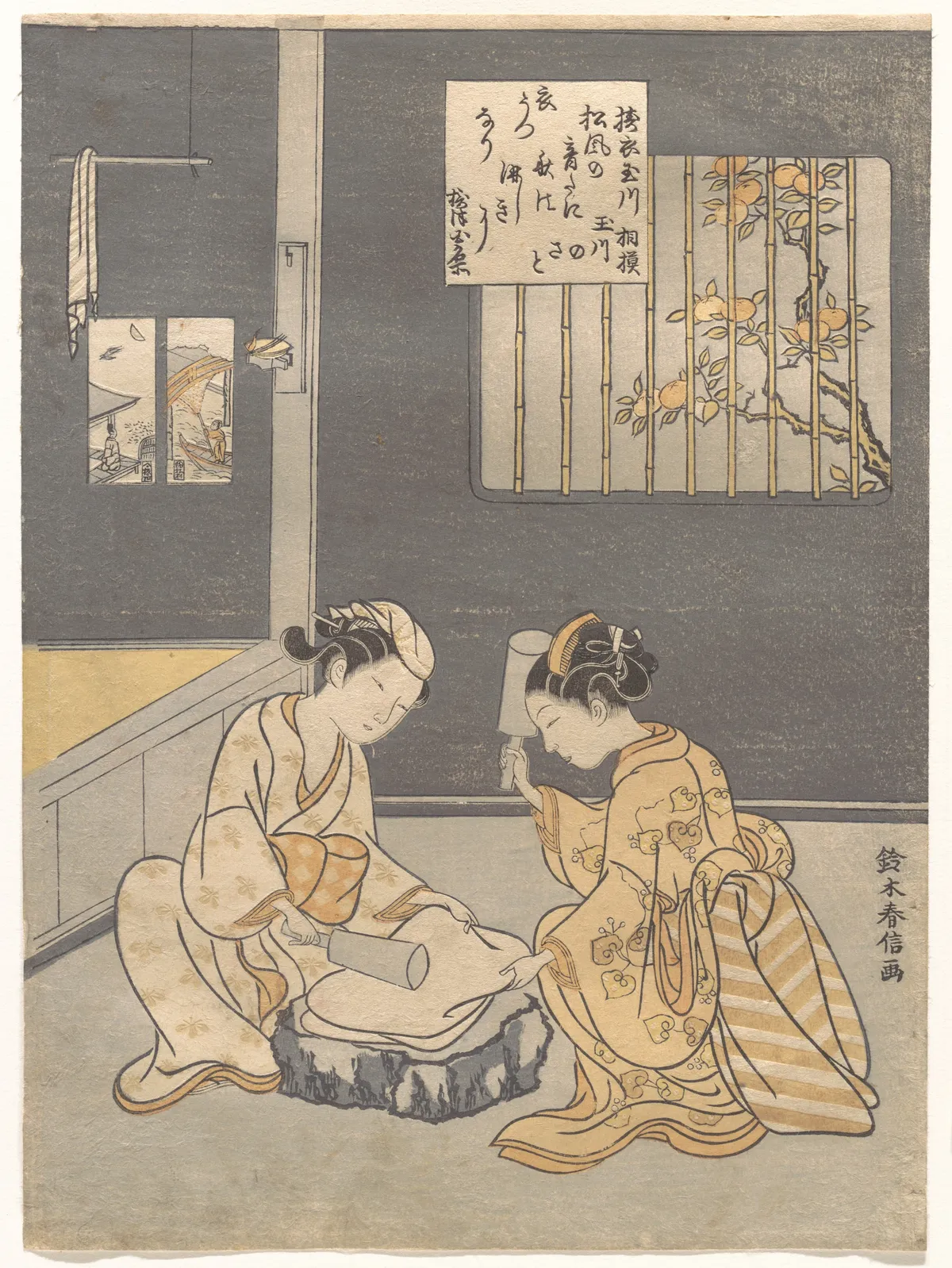
The Whisper of Water
The Jewel River flowed quietly under a pale sky. Mist curled above the surface. Two women stood knee-deep in the shallows. Their kimonos clung to their legs, soaked by the river's touch. In their hands, cloth rippled like water itself. They worked rhythmically, fulling fabric with practiced ease. The air was cool and damp. The sound of water, a gentle murmur, filled the space between them.
The river was alive with history. It had seen countless seasons. Each ripple carried whispers of old tales. The women's movements were deliberate, part of a tradition as old as the stones beneath their feet. They spoke softly, words lost to the breeze. The cloth, now cleansed and softened, was laid across smooth stones to dry.
Beyond, mountains loomed, grey against the sky. Trees lined the riverbank, their leaves a dark green. The scent of wet earth and pine lingered in the air. Time slowed, suspended in the river's embrace. Here, at the Jewel River, the world was both vast and intimate.
Historical Echo
Suzuki Harunobu captured a moment in Settsu Province, a place known for its Jewel Rivers. The act of cloth-fulling was a common sight, a ritual of domestic life. Harunobu's work, from around 1766–67, offers a window into this serene landscape. His delicate lines and subtle colours reveal the quiet beauty of everyday existence.