

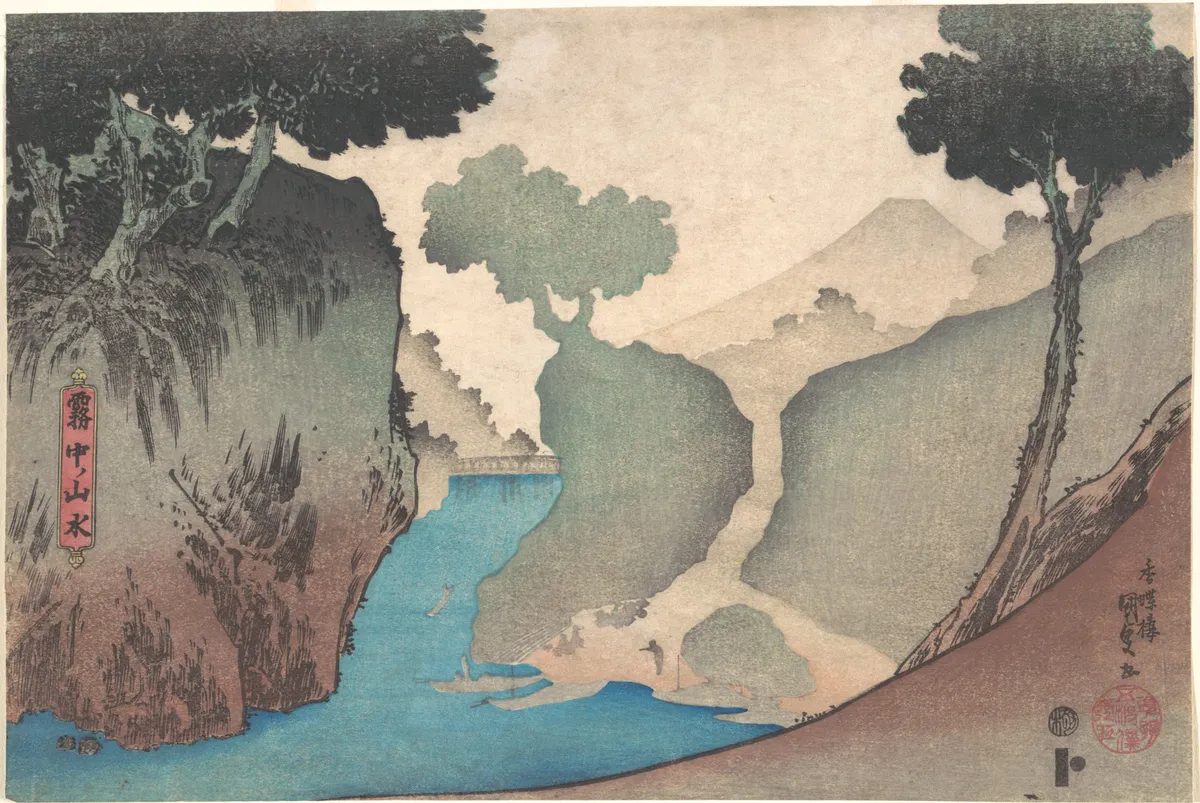
Veiled Horizons
The mist clings to the earth like a whisper, softening the edges of the world. Shapes emerge, half-formed in the shrouded light. A lone traveller stands, the weight of his woven cloak heavy with dew. Resting his hand on a gnarled walking stick, he pauses. His breath mingles with the mist, vanishing into the damp air.
Behind him, an ancient pine leans, its needles glistening with moisture. The bark is rough against his fingers. Beyond, a village slumbers, roofs barely visible through the grey veil. Lanterns flicker faintly, their glow muted, swallowed by the mist.
The traveller listens. The silence is profound, only broken by the distant call of a night bird, lonely and haunting. He takes a step forward, the soft earth yielding beneath his sandals. The path winds on, disappearing into the mist, a promise of unseen destinations.
The air is cool. It smells of rain and moss, and something older, a memory of distant mountains. His journey is etched into the landscape, each step a quiet mark upon the world.
Historical Echo
Utagawa Kunisada, renowned for his portraits and scenes of Edo life, captures the ethereal beauty of a landscape veiled in mist. The mid-19th century saw Japan in a state of transition, the old ways mingling with new influences. Kunisada's work reflects this, a moment suspended between clarity and obscurity. The traveller, a symbol of life's journey, moves through a world where the past and present blur. It is a scene of quiet introspection, inviting the viewer to step softly into a world where time is as fluid as the mist itself.